An Ad Man’s Review of “Three Billboards Outside Ebbing, Missouri”
Outdoor Advertising isn’t dead yet. But can it help solve a murder?
There are a few moments in the life of an advertising agent when our craft is hoisted to the forefront of society’s collective attention, and you can turn to your friends and say, “Yeah, that’s what I do.” And when advertising does make an appearance, it usually surfaces as narrative texture in a TV or movie plot. Done well, it’s the fulcrum around which a more complex plot pivots (Mad Men); at its worst, it’s the set-up for a two season reality show (The Pitch); and somewhere in between, it’s the leading man’s quirky job in an above-average romantic comedy (How to Lose a Guy in 10 Days). Never, however, has advertising’s role in narrative film been more ambitious than in Martin McDonagh’s dark comedy, Three Billboards Outside Ebbing, Missouri.
The plot of Three Billboards revolves around a few key characters: Mildred Hayes (Frances McDormand), the bereft and ornery mother of murdered daughter Angela; Sheriff Willoughby (Woody Harrelson), Ebbing’s affable and universally liked lawman; and Jason Dickson (Sam Rockwell), Willoughby’s degenerate and “vaguely racist” sidekick.
The movie wastes no time getting started, opening on Mildred Hayes taking out a year-long contract on three ancient billboards—are those bulletins or posters?—on a seldom-traveled side road outside the sleepy fictional town of Ebbing, Missouri. The billboards’ serialized message is simple: “Raped while dying, and still no arrests? How come, Sheriff Willoughby?” The billboards quickly come to the attention of local press and law enforcement, and Hayes is left to defend her ads at every turn. Ebbing isn’t a place that takes kindly to feather rufflers, and the billboards draw the ire of the locals en masse, including Sheriff Willoughby, Dickson, Hayes’ son’s classmates, and even the local priest. Hayes is relentless though, and the billboards remain despite what seems like all of Ebbing’s admonition to take them down. In over 120 minutes of running time, Hayes fights the law and small-town politics, refusing to let her daughter’s murder fade from Ebbing’s consciousness.
McDonagh touches on a few topical themes along the way, including racism and domestic/police violence, without fully diving into any of them. Plot turns in Three Billboards occur with the violent abruptness we’re used to seeing out of McDonagh, sometimes with fiery and arresting images juxtaposed before an operatic backdrop of sound. No one is purely good or purely evil in Three Billboards, and everyone is capable of redemption. A painful flashback midway through the film reminds the audience that Hayes is no perfect mother, making one wonder if her non-traditional media plan is as much penance for parenting regrets as it is about finding her daughter’s killer.
Frances McDormand plays Hayes with all the raw abrasion of a twilighting Nick Nolte, a far cry from her warm Oscar-winning portrayal of Marge Gunderson in Fargo. She curses, smokes, drinks, seldom smiles, and never apologizes. The utilitarian nature of her character is reinforced by her spartan appearance: no make up, blue mechanic suit, and at times, a crips-blue bandana fashioned around the perimeter of her head. Her quest to draw attention to, and ultimately find the killer of, her daughter escalates into a small-scale war—fire and all—with Ebbing as the theater.
Harrelson and Rockwell deliver layered and complex performances, worthy of admiration. A colorful supporting cast—including a humorous appearance by Peter Dinklage—rounds out a just-shy-of-authentic portrait of the rural American Midwest. There are a few questionable character choices, but overall, the cast’s effect is compelling.
Several lines of dialogue poignantly stood out, both from the perspective of an ad man (“When you can’t trust lawyers or advertising men, what has America come to, huh?”) and just as a human being (“Maybe I’ll see you again, if there’s another place. If there ain’t, well, it’s been heaven knowing you.”) On average, McDonagh’s signature screenwriting style drives the plot forward smoothly. Still, there are moments where the off-kilter, superfluous dialogue leans toward awkward rather than humorous, leaving one to wonder if something was lost in translation between McDonagh’s zany Irish/British humor and the American actors tasked with manifesting it.
As an advertising professional, there were a couple of head-scratchers: I found myself thinking, “Is that the font Impact on the billboards? And since when do outdoor companies print back-ups at no additional cost?” But as a Martin McDonagh fan, he’s created something arguably masterful that slots just behind his best (In Bruges) and miles ahead of his more forgettable (Seven Psychopaths). Mad men and perfectly happy people alike will find their thoughts lingering on the film’s nuanced characters, Main Street cinematography, and quirky dialogue long after the billboards finally come down.
Travel’s Rejuvenating Effect on Creativity
Being creative is hard.
Not war hard, or roofing hard, but it’s hard nonetheless. Is “hard” the right word? Maybe “exhausting” is more appropriate. First-world problem of the capital order, I know. But I suspect that exhausted, brain-dead feeling is something humans have experienced since time immemorial. Today it’s music, art, design, and advertising; 50,000 years ago it was cave drawings. Every humanoid who’s had regular pressure applied to the right hemisphere of their brain probably knows what I’m talking about.
I would imagine this isn’t something that occurs regularly for accountants or bankers. No disrespect to either of these esteemed and essential disciplines, but it’s just not the same. Those left-brain professionals might dread a long week at work because they know what awaits them. As a creative, your week is long because you don’t know what awaits you—you haven’t made it yet. And if you’re doing your job right, neither has anyone else. Thus, the cycle continues, and the drain on the brain regenerates anew.
It’s no surprise, then, that we sometimes feel the need to get away for a little bit. In this business, it’s easy to get lazy and resort to alcohol; lord knows agents of advertising are no strangers to the sauce. But it’s a band-aid, and the real escape is, well, a real escape. Travel. Vacation. Pilgrimage. Call it what you like, but it’s a useful tool in dusting off that oft-pressed creative button, and getting some fresh perspective on your work—and your life. Don’t take my word for it: take theirs, and theirs. And theirs.
Sometimes it’s a weekend trip to wine country, or a quick jaunt down to San Antonio’s Riverwalk. Other times you need something a little more extensive. Such was the case for me this past October, when I had the chance to descend on what some consider the most creatively refreshing place on Earth: Europe. What follows is a photo journal of my journey, and a chronicle of my transformation from struck creative match back to real fire starter.

Paris’ famous Arc de Triomphe.

The view from the top.

Nothing says “refreshing” like the Catacombs, amirite?!
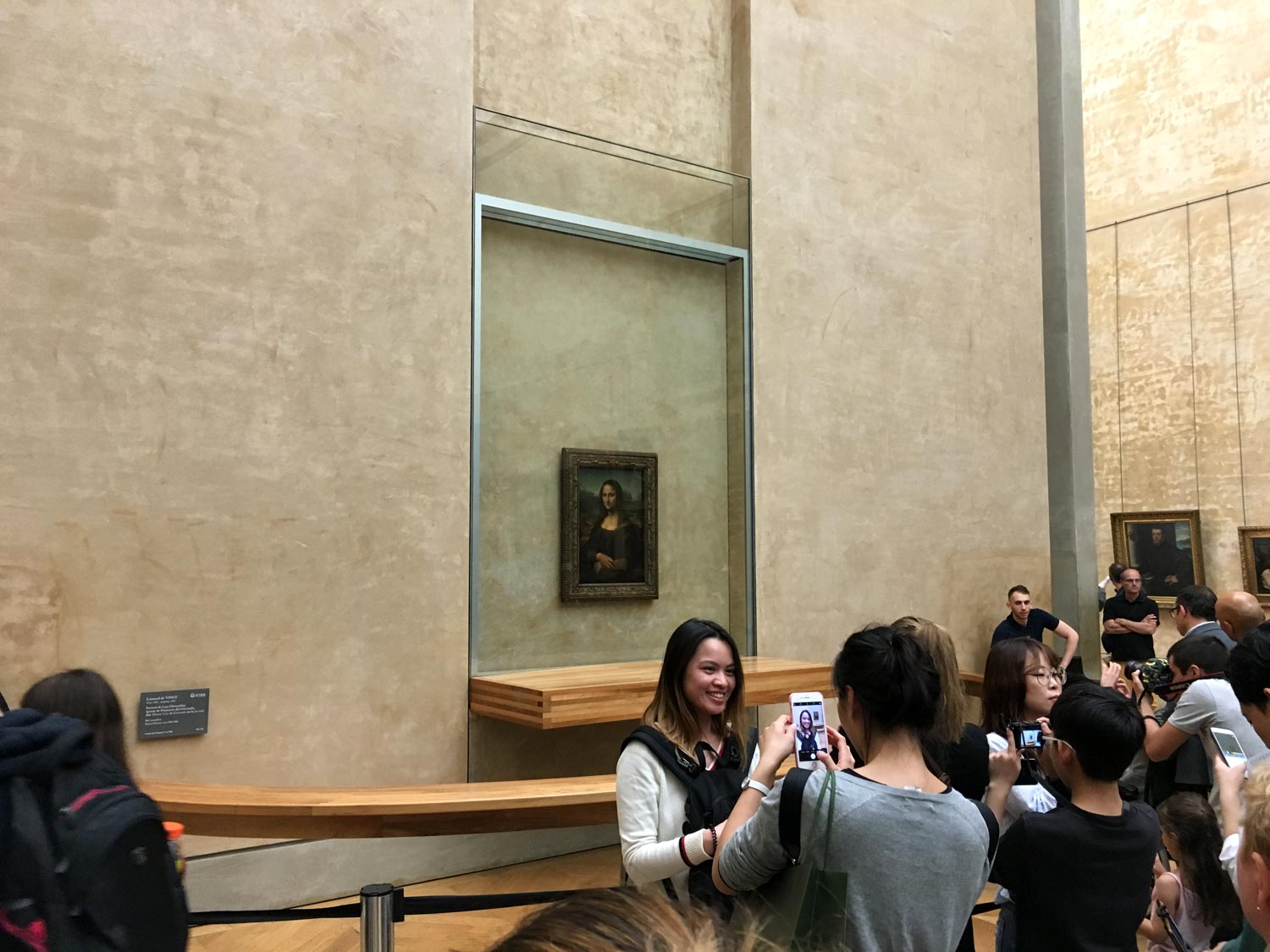
The Mona Lisa: bigger than I’d expected because of how many times I’d been told that it would be smaller than I expected.

Taking a break from wine at the Bordeaux Cathedral.

Andorra, a country I didn’t know existed until we found ourselves repairing a flat tire smack in the middle of it.
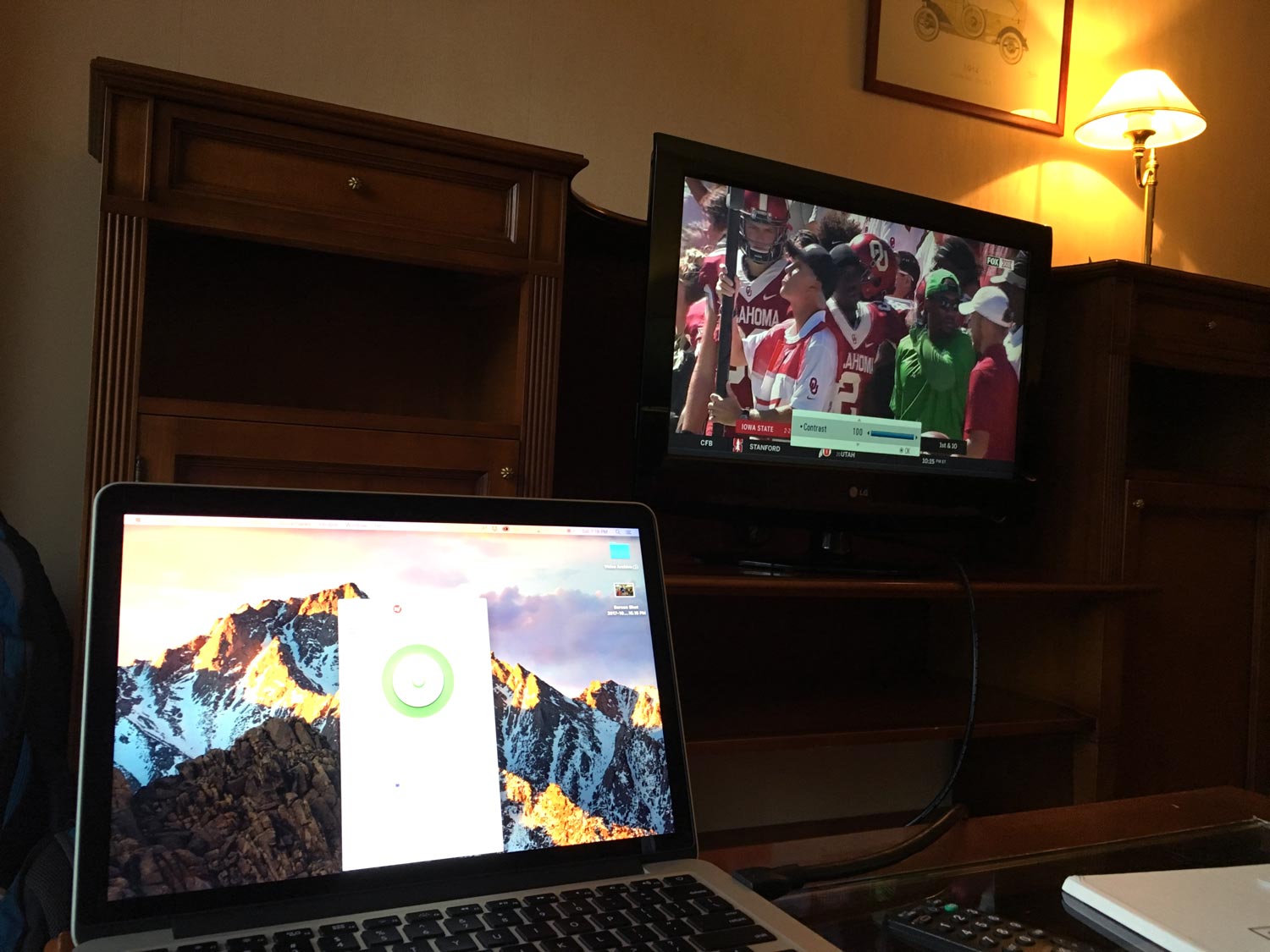
You’re never too far from home to keep an eye on your enemies.

I wonder if Gaudí ever felt the urge to get out of Barcelona?

Even Europe’s rest stops have ruins. Show-offs.

One of many million-dollar views from the South of France.

The looming cliffs of Tourettes sur-Loup.

Monte Carlo’s famous Turn 6.

Europe has castles. Lots of castles.

The view from the top of the world in Eze, France.
After 16 days, five countries, six speeding tickets, and about a thousand bottles of wine, I packed my bags and boarded my plane back to the mainland. With a renewed spirit and a boat load of stories, I returned to The Chair ready to tap my newfound perspective to the benefit of the agency and our client-partners.
What is it about travel that restores one’s creativity? Is it the food? The people? The views? The spontaneous adventures? Or is it all just a placebo? The simple answer is, yes. And for all the other creatives out there, take it from someone who’s made a concerted effort to weave travel into the fabric of his existence: it’s essential. A well-timed trip sometimes means the difference between burning out and breaking through. Bon voyage!
The 28-Day Paid Leave Policy Uncovered
The Backstory
America is not the greatest country in the world when it comes to paid leave for workers. While every European country has at least 20 days paid leave (not including holidays) and some going up to as many as 25 days, America has no statutory annual leave entitlement. Obviously we still have paid leave but it’s a miserly average of 10 days (not including holidays) according to the Center for Economic and Public Research. Yes, 10 days. Come on America, we can do better than that.
So about two years ago, we set out to revamp the expectations on paid leave by instituting a 28-day paid leave policy (not including holidays). That’s right, France, Sweden, and Denmark, we bested you by three days. Here is a biased review of this policy after about two years.
3 Benefits Of A Generous Paid Leave Policy
There were three main reasons we decided to implement our 28-day paid leave policy. First, we are a young company and we want people to be able to see the world. Yes, so they can experience new people and cultures, but specifically so they have a worldly perspective on things. How do people behave, communicate, and make purchases around the country and around the world?
“…We saw this as a huge company perk and recruiting talking point.”
Second, we saw this as a huge company perk and recruiting talking point. We could entice new employees with something unique other agencies didn’t have. Third, we would cut down on the administrative time and costs to track, monitor, and regulate every single time someone needed a day off. Those were the three big benefits we thought we would get out of this new policy.
3 Unforeseen Challenges
The first challenge we encountered was implementing this policy. People are so accustomed to not taking more than 10 days of vacation that we had to make a conscious effort to help people realize it was ok to take that time off. So we made sure that all the senior people took as much vacation as possible. In fact, the first year we implemented the policy the senior employees took the most amount of vacation. This demonstrated to the rest of the agency that it was, in fact, ok to use your available time off. The second challenge we faced was adjusting our agency rates. Those of you business owners or CFO’s probably already realized that decreasing the number of hours employees were available to work annually meant increasing the rates of our agency. Yep, a whole 8% increase. Not a lot in the grand scheme of things, but it was something we had to incorporate into our agency.
“In fact, the first year we implemented the policy the senior employees took the most amount of vacation.”
The last challenge we faced was communicating the value of the paid time off to people when they tried to compare us to other agencies. This comparison mostly came up when negotiating salaries. Employees would look at Glassdoor or Salary.com and say “Hey, I should be making X dollars and you all are only paying me Y.” Communicating to our employees that they can’t do a straight apples to apples comparison to other agencies was especially difficult for the less experienced employees. More senior employees never had an issue with it and definitely saw that 28 days of paid leave was extremely valuable. Most of the time it simply took us sitting down with the employee and explaining the value of their total compensation and not simply the salary. Eventually they got it and were happy.
3 Interesting Observations
Looking at the data for the past year, June 1, 2016 – June 1, 2017 there are some very interesting stats. First, people still didn’t use all their time off, but they came close. On average employees only used about 61.8% of their available PTO, or 17 days of vacation. At 27 days, the person who used the most vacation time was one of the partners. At 1.5 days, the person who used the least was another partner.
“…employees only used about 61.8% of their available PTO.”
Second, employees didn’t take 28-day long sabbaticals. There were definitely some long vacation periods of a week or two, but for the most part the time off was evenly distributed throughout the year with 2 days being the average leave amount. Third, our employees only took 1.7 days off due to illness compared to the rest of the US at 4.9 days, according to PwC (formerly PricewaterhouseCoopers). We communicated that when people felt sick they should not come into the office. With 28 days of paid leave, most of our employees adhered to this request and (this is only our theory) prevented the spread of viruses to other employees. Doesn’t that make perfect sense?
3 Reasons Why This Works For Us
We think every employer should look at raising their standards when it comes to paid leave, but understand that this kind of policy might not work for everyone. However, there are some reasons we think it works for us that might apply to your business. First, we try to hire very motivated and high-performing employees. We feel these types of people are always going to give you their best no matter how much paid leave you have. Second, we are in a creative environment and good creativity works in highs and lows. There are periods of time when we all need to be “on” and generating great creativity followed by lows where we need time for our brains to rest. Trekking along at a paced effort always generating mediocre creativity is what you get if you never take breaks.
“79% of US employees would prefer a perk like more vacation days over a pay raise”
Lastly, people are motivated by more than just money in today’s workforce, but this especially applies to creative people. A recent survey by Glassdoor revealed that 79% of US employees would prefer a perk like more vacation days over a pay raise. Creative people want to do great work. Their work is an extension of them. So if you can provide a great environment for them to be creative and also allow them to take time off to find great inspiration for their creativity, that’s incredibly valuable.
So there you have it. That’s a quick overview of how our “generous” vacation policy has been playing out thus far. We think America can do better than what’s currently acceptable. So come on, let’s make American Paid Leave great again.
If you have any questions on implementing a similar policy or have any experiences from your own policy you want to share, we’d love to hear about it.
We’re Not All Men
I remember asking my mom as a sophomore in high school what she wanted to be professionally when she was my age.
To the sudden upset of my youthful naïveté, she explained the very fact she went to college was a little unprecedented in the 1960s, and when it came time to choose a career she only had three options.
“Back then, we didn’t have the same choices you do now,” my mom said after she chuckled at my initial question.
“Realistically I could have been a secretary, a teacher or a nurse. So I chose teacher.”
This conversation has persisted as one of my more vivid memories and more recently, as a constant needling in the back of my head.

Today, I don’t work as a secretary, teacher or nurse. And as a child, I didn’t want to be any of those either. For no comprehendible reason whatsoever, I actually wanted to be a truck driver. And then I decided I wanted to be the first female president. And then I thought about becoming a lobbyist for some gigantic corporation before finally settling on an advertising executive. To be fair to traditional female gender roles, I do remember having brief thoughts of being a waitress and an actress (simultaneously), but those didn’t last as long as my other dreams.
I chose advertising because I like to talk and I like creativity. My oldest sister had been in advertising and her life seemed pretty glamorous, so I followed suit.
At the time it didn’t occur to me how many women worked in advertising and that aside from the creative department, women dominated the field. I felt empowered looking around the office and seeing so many women calling the shots – but when I looked a little closer, the shine I previously stood in awe of, began to dull.
I was asked to work the front desk on top of my actual job description because upper management liked pretty women to greet guests to the office. I was told that I needed to order food for my male dominated creative team when they worked late as a sign of my support of their efforts. I was in charge of filling out the time sheets of my male superiors in different departments because “that’s just how things are.”
Here I was thinking I chose a career immune to gender-mandated stereotypes since the Mad Men era, just to discover my choices had already been made for me.
Nevertheless I found a home in this agency and I persisted in my career. I began to play the game, but I played it my way. I decided I would curl my hair and dress up, but I would speak with more assertiveness and draw clear lines in the sands of my comfort zone.
I feasted on articles and news stories that brought to attention the wage disparity of women in the workplace – and instead of being disheartened, I was encouraged. There was still so much work to be done and I could be a part of that change. So, I pushed back when I was asked to do something I felt would not be asked of my male counterparts, and to my surprise I was respected for it. I started to see some small shifts in how I was being treated, and my heart leapt.
This is why we all have to be feminists; because people can change. Because the world is not stagnant. Because when half the world feels empowered, the other half only prospers.
As women facing a very real inequality, we can’t just complain about the way things are and we can’t just ask for change, we have to demand it.
A few years later, I began interviewing with a new agency, Tilted Chair Creative, and one phrase on their website sold me into the agency: “We’re not mad. And we’re not all men.”
Reading it now, my eyes still well up. We’re not all men. Yes, it’s a clever play on a well-known TV show, but for the women reading it, it’s so much more. It’s recognition of belonging and of acceptance. It means that the agency recognizes society’s preconceived notions of how things have been, and that they refuse to accept it. Tilted Chair Creative, in everything that they do, shakes up the status quo. Our partner-team is made up of five males, but every single one of them welcome women a seat at the table.
When I asked them their stance on #ADayWithoutAWoman there wasn’t even a moment’s pause. They sent an email informing all of their female employees of the opportunity and wore red (the official day’s color) the next day for a group picture to stand in solidarity.

Because of agencies like Tilted Chair Creative, little girls can grow up thinking about more career opportunities than just three traditional ones and young women can begin their dream career without becoming disillusioned by the entire industry.
Tilted Chair Creative is made up of men and women – and most notably, of feminists. Their acceptance of women runs deep, not just in their hiring practices but all the way to their opening introduction.
The world changed for my mother in the 40 years between when she chose her career and when her youngest daughter did. I can only hope that in 40 more years, this conversation of equality is a relic of the past – something to be recognized as a historic victory because of the feminist champions of the world.
Female Consumers Need Female Storytellers
Queens of Consumption
According to Ernst & Young, the global incomes of women around the world are predicted to reach $18 trillion by 2018. That’s a massive amount of spending power. And not only do women have spending power, but they also influence what others buy (think about how your girlfriend guided your decision to give your mom that nice Capri Blue candle for Christmas). Their reach stretches across markets as, even today, women are the primary caregivers for
children and elderly in almost every society around the globe. And they buy on behalf of all the people in the queendoms they rule. We know your dad didn’t pick out those cool Nikes, no one besides your mother is thinking about Grandma’s 73rd birthday, and the only cologne that matters is the one that smells best to your girlfriend.
The Stories that Consume Them
Combine this data with the insight that good storytelling in advertising is a brilliant way to engineer authenticity, trust, and discovery among clients and you almost have a foolproof recipe for success. We know storytelling is a natural part of the human experience. When brands can communicate in a meaningful way they can evoke emotion from their audiences and develop personal connections with consumers. No matter the medium, thoughtful storytelling distinguishes a good brand from a great one.
Now, you have your target audience and know how the message needs to be conveyed, but somebody has to create the story. Women are intuitive and have a sixth sense for sniffing out bullshit. They want authenticity. They want a good story that touches on a human truth they identify with. Nobody wants to be served a “make it pink” ad. We’ve seen how those have failed in the past (lookin’ at you, Bic). It becomes obvious: the better the story, the higher the profit margin. So, who can give the ladies what they want?
The Storytellers They Need
The answer is clear: it’s other ladies. They know the stories that need to be told and how to tell them. Female creatives hold the key to the most powerful consumer insight; so hire them. And then when you do, treat them like they matter. Hold women to a high esteem so clients will do the same. When you introduce them, take a moment to remember that unlike their male colleagues, the client may choose to ignore the women in the room or assume they are there just to take notes. This might be because your female creative doesn’t look like she knows anything about, let’s say… golf — but she does. She won the longest drive under 30 at the Clover Stornetta Classic AND she’ll be the one convincing everyone to buy clubs from the people who just ignored her. When females feel like they are legitimate players in the conversation, the story gets better.
7 tips for landing your dream job at Tilted Chair (or How to get a job in Austin for the SEO-bots)
We’ve grown a lot over the last year and half.
That means we have had to do a lot of hiring. While doing all that hiring we discovered that a lot of people are not really that good at getting a job. Some use a very obvious template where they copy and paste a position and company name into their cover letter. Others just don’t seem to think about the hiring process from the employers POV. So we thought it would be advantageous to help future applicants. Whether you are applying at Tilted Chair or another agency, these 7 tips should be taken into consideration.
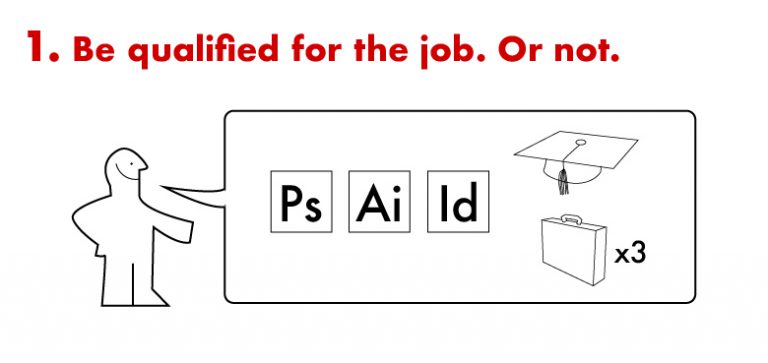
I will say that 90% of the time we only hire people who are exactly qualified for the position. However, we found about 30% of applicants are not qualified. If the job posting says “2-3 years of agency experience” then make sure that you have 2-3 years of agency experience. Your chances of being dismissed are pretty good if you are a recent graduate or you have 10 years experience. There is a reason employers put criteria in the listing. If you told a real estate agent that you were looking for a house in the $200k-$300k range you probably wouldn’t be too happy if he/she showed you $100k or $900k house. So make sure you are qualified for the position. With that being said, our most recent creatives were not qualified for the position we were looking for. They were in the 10% of unqualified applicants that got the other 6 items on our list right.
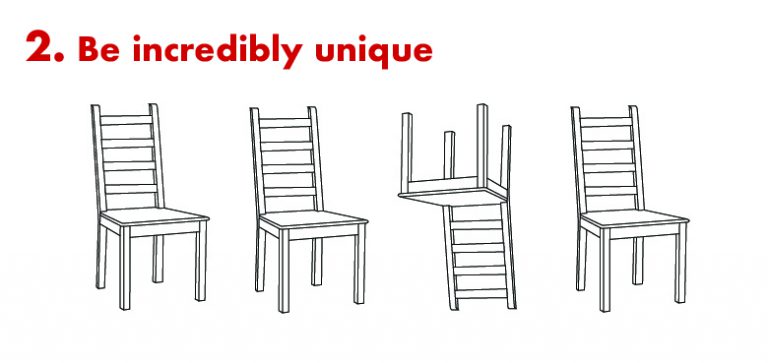
Even if you are incredibly qualified and exactly what the employer is looking for, you should still try to be unique. By this I mean there should be some part of your application, resume, portfolio that really stands out from the rest. It might be the subject line in your email [“Hello, is me you’re looking for?”]. It might be the layout of your resume. It could even be that your portfolio is just so epic that it just pops out from the rest [screen shot of Jared and Jane portfolio]. Our last few hires all had unique selling points. Have a unique selling point in order to get noticed…hmmm, I think I’ve heard that before.
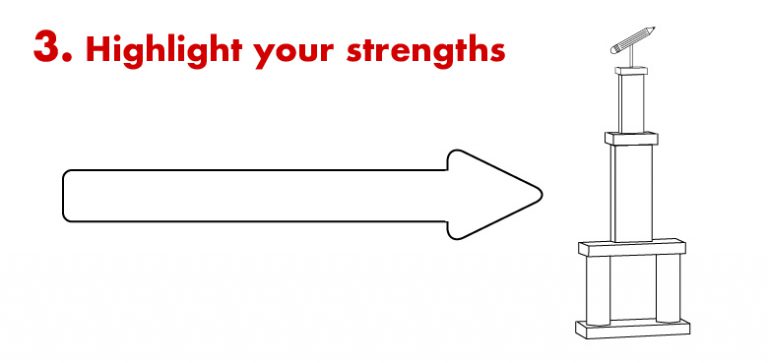
You can do this a few different ways.
- If you have a cover letter or an introductory email I personally love when the strengths are bullet-pointed or highlighted in some way.
- Paragraphs are so old school.
- We have to go through tons of applicants.
- If you can make it easy for us to find the info we are really looking for, then you are making our job easier.
- Ok, please don’t just put bullet points instead of paragraphs. This was for for demonstration purposes only.
Tell the company that you want to work for them. Austin is a great city. It’s decently affordable compared to other large cities. We have great entertainment. It’s hip. It’s educated. Low crime rates. It has been voted one of the top cities to live in by Forbes many times. We get it. Austin rocks. Please don’t tell a potential employer that you’re reason for wanting to work for them is because you want to move to Austin. If you want to move to Austin, do it. We almost always ask candidates “Why do you want to work at Tilted Chair?” and the best way to lose our interest is by replying with “Well, I’ve heard so many great things about Austin. I was there for a wedding/festival/vacation and thought it was such a fun city.” I’m sorry, but that is the wrong answer. Our recent creative team nailed their answer when they said “Well, we have been following Tilted Chair for a while now and we really love the work you all have been doing. You have cool brands, and seem share the same values as us. Plus, Austin seems like a cool city.”
So you got an interview! Congrats. You now have your opportunity to shine. I could write an entire new blog on interview do’s and don’t’s but I’ll keep this brief. First, this is as much of a chemistry check as anything else, so be cool. Smile. I know that’s easier said than done, but try your best. I’m sure not every employer will agree with us, but we want the interview to be a two-way conversation. Like a first date. We will ask you some questions, but you should ask us some questions too. Let’s get to know each other, right? And just like on a first date, don’t talk about your ex. Especially don’t talk about your ex if you did not have a good experience. Saying your last employer didn’t know what they were doing, or was too crazy, or micromanaged you just brings the energy of the interview down. Be positive. We want to work with positive people. Say you’re looking to gain leadership experience or more autonomy. Second, be memorable. We had a candidate that wrote an awesome slam poem for us. You don’t always have to be that memorable, but you should definitely leave us with something to help differentiate you from the other candidates. In her interview, our office manager shared the thoughtful email that her last boss sent to the entire company regarding her departure and the impact she made there.
This seems pretty basic, but send an email after the interview. Before we make anyone an offer, we make sure they sent us a “thank you” email. Be Lovable is one of our agency principles, after all.
Austin is full of smart, cool people. There have been lots of times we have had more than a few really qualified candidates. For our office manager position we had three awesome candidates. All qualified. All smart. All a great culture fit. Sometimes it just comes down to a flip of the coin. No, not a literal flip of the coin. Sometimes the final tipping point does come down to just a gut feeling. So if you’ve done everything else right, the last thing to do is simply cross your fingers and hope you’ll be getting an offer.
I hope this helps anyone looking for a job in Austin or at Tilted Chair. We know it can be tough out there. Keep grinding it out and keep checking our website for future job openings. Good luck!
Behind the Scenes: A Very Chair-y Christmas Card
As an advertising agency, we wanted to send a holiday card to thank everyone for a great year and to let them know we’re looking forward to killing it again in 2016. Being the creative people that we are, we knew we didn’t want to just sign and seal a few generic greeting cards, so I was charged with the challenging task of planning a kick-ass Christmas card. My objective was to find a unique way to show not only how much fun we had working with our clients this year, but also how much fun we’ve had working with each other along the way.
The custom of sending Christmas cards started way back in 1843 with Sir Henry Cole’s attempt to make the Public Records Office (now the Post Office) a more approachable service for public use. Today, the tradition has continued as a way of showing other people how your kid has transitioned from a gangly, pimple-faced adolescent to an okay-looking teenager. In the advertising world, sending a holiday card is a nice way of telling clients and friends, “we may be nerds, but we’re really really ridiculously good-looking.” Just kidding…kind of.
In my fourth month as Production Intern and after having been welcomed with open arms to such a collaborative work environment, it was important to me that everyone be featured on the card, including all the dogs that make coming to work everyday so fun. Two equally important goals were to make the card entertaining enough that people didn’t toss it in the recycling bin once opened, and to illustrate the camaraderie of Tilted Chair. The final product? A Brady Bunch-esque holiday card.

I wanted each frame of the card to interact, so planning the shoot was essential. Especially since we we had six dogs, a cat, and 14 humans to shoot. After mapping out all the interactions, making sure everyone would be dressed appropriately (and by appropriately I mean in ugly sweaters and, in one case, an epic sports coat), and setting up the lighting and background for the shoot, the fun began. Throughout the day, groups of two and three Chair-ians, sometimes accompanied by a canine in a sweater vest, came down to the shop to take their photos. Shoots for clients are both fun and rewarding, but Hua and I really enjoyed this particular shoot because capturing someone’s personality in a photo is so much easier when they’re your friend. That being said, the photos came out so much better than I had expected.
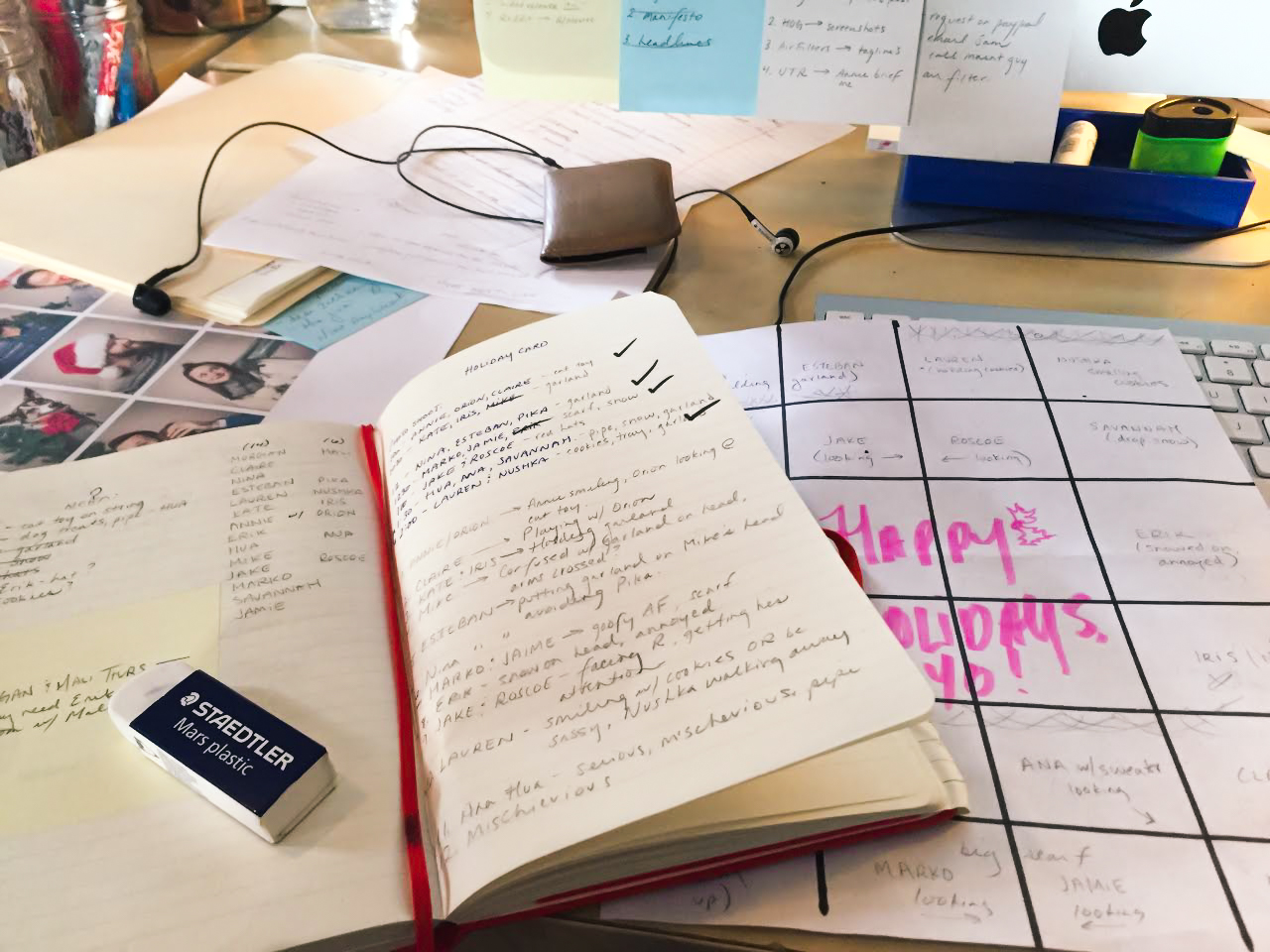
After choosing the best photo of everyone and laughing hysterically at all of the photos of our furry friends, I did some basic editing (not much is needed when Hua is behind the lens) and arranged the photos that would eventually be printed on cardstock and mugs for our clients. Arranging the photos ended up being a brain teaser, like one of those sliding puzzle games with one blank space, our logo serving as that space. With the help of a few brilliant minds, we successfully arranged the photos into the grid we wanted.
Once the photos were successfully laid out on the artboard, it all started coming together. It was looking great, but had a few minor problems: the scarf between Jamie and Marko was a little off, Mali (our beloved and sometimes exasperated beagle) was facing the wrong way, the wand and string attached to Claire’s cat toy was hanging about an inch to the left of the actual toy in Annie’s frame, and Nushka’s garland wasn’t matching the garland in Claire’s frame. Okay, that sounds like a lot of problems. I swear I planned!
All thanks to our amazing art directors and the all-mighty Photoshop, my problems were solved — and I bet you weren’t even able to notice the edits! The card ended up being a huge success and taught me that no matter how much you plan, something will always go wrong and you just have to roll with the punches. I also learned that there’s no shame in asking for help, especially when everyone around you is eager to see you succeed. Here’s to 2016, y’all!