“Trump’s Masterclass in Marketing: How Trump Leveraged Proven Marketing Principles to Win the 2024 Election”

In 2024, Donald Trump didn’t just run a political campaign; he launched a full-scale marketing movement. Love him or loathe him, one thing’s for sure—Trump’s approach to winning over voters felt a lot like your favorite brands winning over consumers. Here’s how he applied some tried-and-true marketing principles to secure his victory, and why his playbook might look familiar to anyone in the advertising world.

1. A Clear Value Proposition—Like Nike’s “Just Do It”

If Trump’s campaign had a tagline, it could have been something like, “I’ll fix it.” The message was simple and aimed directly at voters’ biggest pain points: the economy, safety, and national pride. Much like Nike’s “Just Do It,” which invites customers to achieve greatness in a few simple words, Trump’s message was clear, motivating, and easy to remember. Instead of weighing people down with policy jargon, he cut right to the chase, letting voters know exactly what they’d get with him.

Imagine the campaign team brainstorming: “How about ‘We’ll enact comprehensive economic and geopolitical reform initiatives?’” *Nah.* They kept it tight and relatable. Nike’s been doing it for decades, and it turns out, so did Trump.

2. Direct Audience Engagement—Taking a Page from Wendy’s Twitter Playbook

Wendy’s Twitter account has set the gold standard for direct, often humorous engagement with customers. They’ve created memorable moments with fans by roasting competitors, poking fun, and building a reputation as the sassy fast-food brand we didn’t know we needed. Trump’s direct communication on platforms like Twitter was similar—unfiltered, relentless, and always targeted right at his audience.

Whether they loved him or hated him, voters couldn’t ignore him, and that’s often half the battle in marketing. Like Wendy’s, Trump kept his messages quick, punchy, and often a little spicy. There was no “let’s wait and see” in his communication strategy; instead, he was straight in, hashtag and all.

3. Emotionally Charged Messaging—As Refreshing as a “Share a Coke”

Trump’s campaign tapped deep emotions—discontent with the economy, anxiety over safety, and hope for a better future. His ability to stoke these feelings made his base incredibly loyal and engaged. Remember Coca-Cola’s “Share a Coke” campaign, where they personalized bottles with people’s names? That was less about the Coke and more about connecting friends and family through shared moments.

Trump’s messaging resonated similarly, creating a connection with his audience that went beyond policies. Like Coke’s campaign, he didn’t just present himself as a candidate—he became part of people’s identities, hopes, and dreams.

4. Addressing Specific Audience Needs—Dove’s “Real Beauty” Meets Political Campaigns

Dove’s “Real Beauty” campaign revolutionized beauty advertising by addressing specific concerns and insecurities. Instead of idealized models, Dove showcased real people, speaking to women’s desire to feel valued and accepted just as they are. Trump, too, addressed distinct voter concerns, from economic worries to issues on immigration.

By appealing to each group’s unique priorities, he created a coalition that crossed demographic and social lines. Much like Dove, he didn’t make voters conform to a single message but tailored his approach to meet them where they were.

5. Us vs. Them—Harley-Davidson’s Rebel Identity Gets Political

“Riders Wanted.” Harley-Davidson’s rebel identity has attracted loyal followers who see themselves as outside the mainstream. Similarly, Trump created a distinct “us vs. them” narrative, positioning himself and his supporters as the champions of “real Americans” versus the so-called elites. This strong identity—like that of Harley riders—encouraged a sense of belonging and a common cause.

And just as you’ll see die-hard Harley owners with tattoos and customized bikes, Trump’s followers wore hats, waved flags, and joined a movement. It’s the power of a shared identity—and Trump tapped into it masterfully.

6. Emphasis on Stability and Trust—IBM’s Classic “Think” Messaging

In times of uncertainty, people gravitate toward brands that promise stability. IBM’s long-standing “Think” slogan exemplifies this—reliable, forward-thinking, and safe. Trump’s promise to stabilize the economy and restore traditional values offered voters a similar sense of security. His emphasis on economic growth and stability spoke to those seeking a steady hand during turbulent times.

Like IBM’s promise to “Think” (and, implicitly, “We’ve got you”), Trump’s message implied, “I’ve got this under control.” It was a reassuring promise in uncertain times—exactly what IBM has done for businesses for decades.

7. Consistent Messaging—Geico’s “15 Minutes Could Save You 15%”

Trump’s campaign hammered home the same themes repeatedly, whether it was the economy, immigration, or national pride. The result? A cohesive, memorable brand that stuck with voters. Think of Geico’s “15 Minutes Could Save You 15%.” That message has been around so long, you could probably recite it in your sleep.

Consistency builds familiarity, and familiarity builds trust. By the time Election Day rolled around, everyone knew what Trump stood for. In the end, it was the persistent, drumbeat repetition of these core messages that helped him stick in voters’ minds.

In a nutshell, Trump’s campaign in 2024 was a classic case of smart marketing principles applied to politics. By using clear, consistent, and targeted messaging, he was able to capture attention, build loyalty, and drive engagement. He took some of the world’s best branding lessons, put them into political terms, and—like any good marketer—kept his message straightforward, memorable, and impossible to ignore.

Love it or hate it, his campaign was a masterclass in how brand loyalty can turn into voter loyalty. And hey, if nothing else, it’s proof that sometimes winning is as much about the strategy as it is about the product.

Is Your Brand Forgettable? 5 Traits That Separate Icons from the Ordinary

So, you’re setting out to build—or maybe revamp—a brand that stands the test of time. It’s no small task! The marketplace is crowded, the competition fierce, and consumers have more options and opinions than ever. But here’s the good news: every great brand, from the classic Coca-Cola to the trailblazing Patagonia, shares certain characteristics that keep them relevant and beloved. If you get these right, you’re setting up your brand to be one of the greats.

Below, we’ll break down five key traits that make the most memorable brands truly unforgettable. We’ve paired each one with a real-world example to show how brands bring these principles to life—and how you can, too.

1. A Clear Purpose and Mission: Look to Patagonia

Every brand needs a reason for existing, and (spoiler alert) it should go beyond making money. Great brands stand for something bigger. Patagonia, for instance, isn’t just in the business of making outdoor gear—they’re here to “save our home planet.” That mission guides every decision they make, from the materials they choose to the causes they champion. Customers who value environmental responsibility connect deeply with Patagonia’s purpose, knowing their dollars support a brand committed to positive change.

Takeaway: Define your brand’s purpose. It will guide your decision-making, attract like-minded customers, and make your mission more than just a marketing tagline. A brand with a clear purpose is one customers are more likely to trust and champion.

2. Consistency: Coca-Cola Shows Us How It’s Done

If there’s one thing customers love, it’s consistency. Great brands don’t have to reinvent themselves constantly. Instead, they stay true to a core identity that remains instantly recognizable across decades. Coca-Cola, with its iconic red and white branding and timeless message of happiness and refreshment, has mastered the art of consistency. From billboards to Super Bowl commercials, Coca-Cola’s branding and messaging rarely stray from its core promise. This familiarity builds trust and makes the brand feel like a dependable old friend.

Takeaway: Be consistent in your brand’s visuals, tone, and message. Familiarity doesn’t just breed trust; it’s also what makes a brand feel like a safe choice when customers are bombarded with options.

3. Authenticity: Ben & Jerry’s Keeps It Real

Today’s consumers crave brands that are genuine and honest. Ben & Jerry’s is a prime example of this. Known for their activism and values, they’re outspoken about their support for social justice, climate action, and fair trade—all of which are deeply rooted in their brand DNA. And they don’t just talk the talk; they put their money where their mouth is. This authenticity isn’t just a marketing angle; it’s integral to who they are, and it resonates with customers who value transparency.

Takeaway: Authenticity isn’t just a buzzword; it’s essential. Your brand should reflect its true values and live them in both marketing and actions. When people know you’re genuine, they’re more likely to support and advocate for you.

4. Adaptability: Nike Evolves with the Times

To stay relevant in an ever-changing world, a brand has to be adaptable. Just look at Nike. They’ve kept up with the pace of change, evolving their products and messaging to reflect new cultural values and consumer needs. From tackling social justice in their ad campaigns to embracing digital innovation with personalized fitness apps, Nike stays ahead by adapting while keeping their core “Just Do It” ethos intact.

Takeaway: Stay true to your brand’s core identity, but be willing to evolve with cultural shifts and new technologies. Brands that adapt without losing their essence create excitement and relevance, engaging customers across generations.

5. Emotional Resonance: Apple Taps into the Heart

People remember how you make them feel. That’s why great brands connect on an emotional level, fostering loyalty that goes far beyond a product’s function. Apple has mastered this approach by positioning its products as symbols of creativity, individuality, and innovation. With campaigns that appeal to our inner artists and a community of die-hard fans, Apple isn’t just selling technology—they’re selling a vision of the future and a sense of belonging.

Takeaway: Think about the emotions you want your brand to evoke. Whether it’s nostalgia, excitement, or inspiration, brands that create strong emotional connections earn loyalty and advocacy.

Wrapping It Up: Building a Great Brand Starts Here

Building a brand that sticks doesn’t happen by accident. By focusing on a clear mission, maintaining consistency, embracing authenticity, staying adaptable, and tapping into emotions, you’re creating a brand people won’t just recognize—they’ll remember and trust. Whether you’re building from scratch or breathing new life into an established brand, these five pillars are the backbone of greatness.

So, grab a coffee (or maybe a Coca-Cola?), give us a call for your free consultation, and start building a brand that’s ready to become iconic.

Why Your Brand Isn’t Connecting: It’s Time to Ditch Logic and Embrace the Power of Archetypes

Let’s get real: Most brands are forgettable. They blend into the clutter, shouting about features, benefits, or price, and expecting people to care. The reality? They don’t. If you want your brand to stand out and make a lasting impact, you need to dig deeper than logic and lean into emotion. Enter the world of “archetypes”—a powerful framework that taps into universal patterns of behavior and storytelling that human beings have been drawn to for centuries.

Margaret Mark and Carol Pearson’s The Hero and the Outlaw breaks down this idea beautifully and is a great introduction to Jungian archetypes as they apply to brands. They explain that every brand can embody one of 12 archetypes, each of which resonates with core human desires. When done right, brands that align with these archetypes can form deep, emotional bonds with consumers. These brands stop being just products—they become part of who people are, and who they want to be.

And what better way to show the power of archetypes than to look at one of the most commodified products on the planet: water. Seriously—how do you make something as basic as water stand out? Some brands have mastered it, using archetypes to transcend the everyday and create something unforgettable.

The Hero: Gatorade Water

Every great story needs a hero. Gatorade Water embodies the Hero archetype, appealing to our desire for courage, strength, and achievement. It’s not just water; it’s the water that powers athletes, the water that fuels victory. Gatorade Water positions itself as essential for those who push themselves to their limits. It’s not just about hydration; it’s about conquering challenges. Whether you’re a marathon runner or someone striving to live a healthier life, drinking Gatorade Water is about embodying the spirit of a hero.

The Outlaw: Liquid Death

Liquid Death is the rebel of the water world. Channeling the Outlaw archetype, Liquid Death has completely upended the image of what bottled water should be. It’s raw, it’s edgy, and it’s not afraid to be disruptive. With its punk-rock branding and the tagline “Murder Your Thirst,” this brand goes against the grain of the pristine, clean-cut water category. It appeals to those who don’t just want to be different—they *demand* it. Liquid Death isn’t just about quenching thirst, it’s about rejecting the norm and embracing rebellion.

The Innocent: Evian

Evian embodies the Innocent archetype, symbolizing purity, simplicity, and the desire to return to nature. Its marketing is all about natural beauty, health, and purity, with imagery of pristine snow-capped mountains and crystal-clear streams. When you drink Evian, you’re not just hydrating—you’re engaging in a ritual of self-care that promises to cleanse and refresh you from the inside out. It appeals to the part of us that longs for simplicity and innocence in a complicated world.

The Sage: Smartwater

Smartwater is the Sage archetype incarnate. It’s marketed as the wise choice, the water that’s “vapor-distilled” and enhanced with electrolytes for purity and taste. The brand doesn’t just sell water; it sells knowledge. Smartwater appeals to those who want to make informed, intelligent decisions. It speaks to consumers who value wisdom and insight, who want to feel that they’re choosing the best, most scientifically sound option for their hydration needs. In essence, it’s water for thinkers.

The Ruler: Voss

Voss is the Ruler in the bottled water kingdom. It’s sophisticated, premium, and authoritative. The Ruler archetype is all about power, control, and status—and Voss oozes it. With its elongated modern bottle and reputation for being a luxury water, Voss is the go-to for those who see themselves as tastemakers. It’s for people who value refinement and prestige, for those who don’t just drink water—they drink the finest. When you reach for a Voss, you’re making a statement about who you are: someone in control of life, down to their water choices.

The Explorer: Flow Water

Flow Water is the archetypal Explorer, and does an excellent job of marketing itself as a naturally alkaline spring water, packaged in an eco-friendly, Tetra Pak design. The brand’s commitment to environmentalism and its emphasis on exploring sustainable practices tap into the Explorer’s love for innovation and eco-conscious choices. Flow invites consumers to join the journey toward a cleaner planet, making it a great fit for those looking to make more adventurous and ethical decisions.

The Creator: San Pellegrino

San Pellegrino embodies the Creator archetype, representing artistry, innovation, and craftsmanship. This sparkling water is not just about taste; it’s about the entire experience. With its long history, elegant packaging, and Italian heritage, San Pellegrino is water elevated to an art form. The brand appeals to those who value creativity and expression, offering more than just hydration—it offers a taste of la dolce vita. The Creator archetype connects with consumers who see themselves as visionaries, as people who appreciate the finer, more artistic side of life.

The Caregiver: Poland Spring

Poland Spring taps into the Caregiver archetype, positioning itself as a brand that’s dependable, nurturing, and trustworthy. With its focus on sustainability and its long-standing heritage, Poland Spring aims to provide not just water, but a sense of comfort and care. It’s the kind of water that’s been on family tables for generations, trusted to quench the thirst of everyone from kids to grandparents. The Caregiver archetype connects with consumers who value reliability and community, appealing to those who want to take care of themselves and their loved ones.

The Lover: Fiji

Fiji is pure indulgence, making it the perfect representation of the Lover archetype. From its tropical origins to its iconic square bottle, Fiji is all about sensuality and desire. The brand markets itself as exotic and luxurious, with a taste and feel that transports you to a remote paradise. The Lover archetype speaks to people who want to surround themselves with beauty, who appreciate the finer things in life and aren’t afraid to treat themselves. Drinking Fiji is about more than quenching your thirst—it’s about indulging in a moment of pure pleasure.

The Jester: Hint

Hint takes a playful approach to water, making it the perfect Jester. With its fruit-infused flavors and light-hearted branding, Hint is here to remind us that water doesn’t have to be boring. The Jester archetype brings fun, spontaneity, and a sense of mischief, and Hint’s colorful, cheeky packaging delivers exactly that. This brand speaks to those who want to inject a bit of joy into their daily routine, showing that even something as mundane as water can be a source of fun and excitement.

The Everyman: Ozarka

Ozarka is the water of the people. As the embodiment of the Everyman archetype, it’s straightforward, no-frills, and reliable. Ozarka doesn’t try to be fancy or pretentious—it’s just good, honest water sourced from Texas springs. The Everyman archetype connects with consumers who value authenticity and simplicity, who want products they can trust without the bells and whistles. Ozarka is the go-to choice for those who just want to quench their thirst without overthinking it.

—

Why Archetypes Make or Break Brands

If water—a product that’s literally as basic as it gets—can leverage archetypes to create distinct emotional connections with consumers, imagine what your brand could do. The secret to a memorable brand isn’t in the features or benefits you list. It’s in the story you tell, the archetype you embody.

When you align your brand with the right archetype, you’re no longer just selling a product—you’re offering an identity. Consumers don’t just buy your product; they buy into the values, emotions, and aspirations that your archetype represents. So, which archetype are you? Are you the Hero, the Outlaw, the Caregiver? Or are you still trying to win over customers with logic and losing them to brands that understand the power of emotion?

Stop blending in. Find your archetype, and watch your brand come to life. If you need help standing out from the crowd, we can help. Reach out today for a free consultation.

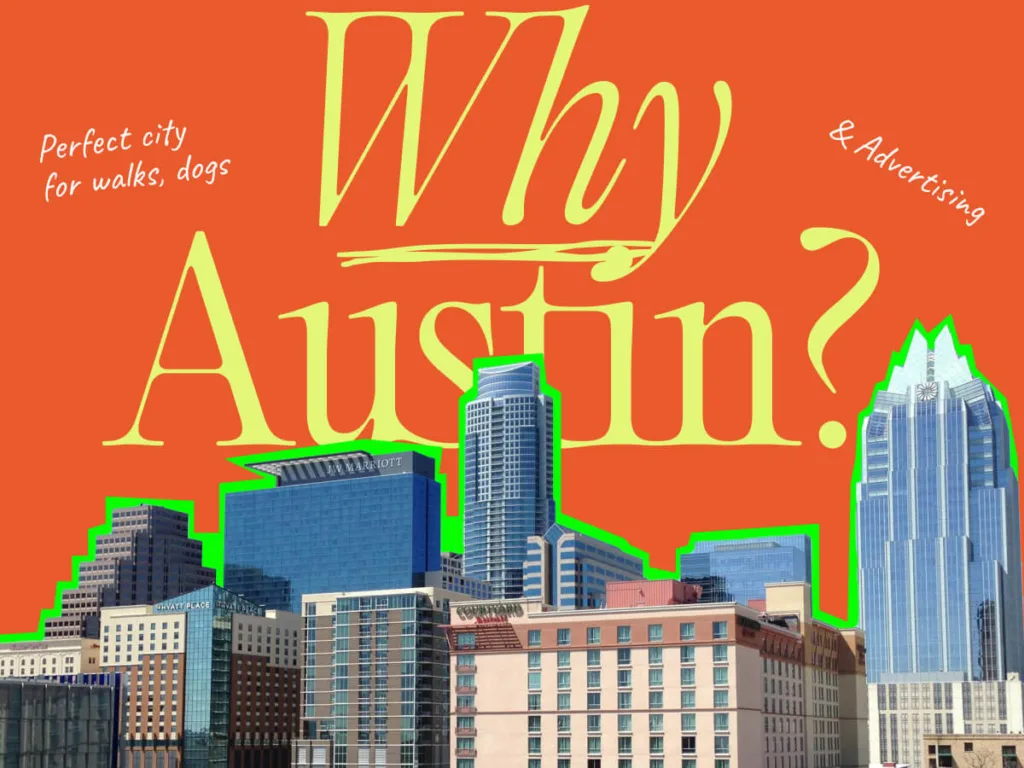
Why Austin is the Perfect City for Innovative Advertising Agencies

When it comes to advertising, creativity and innovation are key. And one city that has become a hotbed for innovative advertising agencies is Austin, Texas. In recent years, Austin has emerged as a hub for technology, creativity, and entrepreneurship, making it the ideal place for advertising agencies to set up shop. From its vibrant arts scene to its thriving startup ecosystem, there are many reasons why Austin is the perfect city for innovative advertising agencies.

1. A Thriving Startup Ecosystem

Austin has become one of the top destinations for startups in the United States. In fact, the city has been named the number one startup city in America by CNBC. With a vibrant and supportive startup ecosystem, it’s no surprise that advertising agencies are taking notice. From tech startups to fashion brands, there is a diverse range of clients in Austin that advertising agencies can work with. This has been great for us at Tilted Chair because it provides ample opportunities for us to create innovative and cutting-edge campaigns.

2. A Creative and Artistic Community

Austin is home to a thriving arts scene, with numerous galleries, theaters, and museums scattered throughout the city. The city is also known for its music scene, with the annual South by Southwest festival attracting artists and industry professionals from around the world. This creative and artistic community is a breeding ground for fresh ideas and new perspectives, which is essential for innovative advertising. It has allowed Tilted Chair to also hire some of the most innovative and creative team members around. By tapping into the city’s creative energy, advertising agencies in Austin are able to produce campaigns that are both original and effective.

3. A Tech-Friendly Environment

As a hub for technology and innovation, Austin is the perfect city for advertising agencies that specialize in digital campaigns. With a large pool of talented tech professionals, advertising agencies in Austin have access to the best and brightest in the industry. Additionally, Austin is home to many tech conferences and events throughout the year, which provides advertising agencies with opportunities to network, learn, and showcase their work. It keeps us fresh and keeps the bar high for our team members.

4. A Strong and Supportive Business Community

Despite its rapid growth from a small town to a world-renowned metropolis, Austin has a strong and supportive business community that is invested in the success of its members. From the Austin Chamber of Commerce to the Texas Entrepreneurs Network, there are numerous organizations that support and promote local businesses. This sense of community is important for advertising agencies, as it provides them with the resources and connections they need to succeed.

5. A High Quality of Life

Last but not least, Austin offers a high quality of life for its residents. With a warm climate, beautiful scenery, and a laid-back vibe, it’s no wonder that so many people are drawn to the city. This high quality of life is not only attractive to employees, but it also helps to attract clients. By being based in a city that is known for its quality of life, advertising agencies in Austin can use this as a selling point when pitching to clients.

In conclusion, Austin is the perfect city for innovative advertising agencies. With a thriving startup ecosystem, a creative and artistic community, a tech-friendly environment, a strong and supportive business community, and a high quality of life, there are numerous reasons why advertising agencies are flocking to Austin. As the city continues to grow and evolve, it’s likely that Tilted Chair will see even more advertising agencies drawn to this vibrant and dynamic city. And while we welcome the competition, if you are looking for an OG Austin advertising agency, we would love to chat with you.

Lights, Camera, Profit: The ROI of High-Quality Video Production

KEY TAKEAWAYS
  • Make a lasting impression
  • Build brand trust
  • Enhance brand storytelling
  • Increase engagement and shares
  • Boosts SEO

In today’s digital age, video content is becoming increasingly popular as a means of engaging with consumers. Video is more accessible than ever before, with smartphones and social media making it easy for anyone to produce and share videos. However, not all video content is created equal, and high-quality video production remains an important aspect of building a strong brand.

Here are some reasons why high-quality video production is still important for building a brand:

1. Makes a lasting impression

High-quality video content is more likely to make a lasting impression on viewers. It captures their attention and engages them with the brand’s message. When done right, high-quality video production can help a brand to stand out in a crowded market and create a memorable impression on potential customers.

2. Builds brand trust

Consumers are more likely to trust a brand that produces high-quality video content. This is especially true for high-consideration, premium, or health-related brands. When a brand invests in high-quality video production, it signals to consumers that they take their brand and message seriously. This can help to build trust with potential customers and establish the brand as a leader in their industry.

3. Enhances brand storytelling

Video content is a powerful tool for telling a brand’s story. High-quality video production can bring a brand’s story to life and create an emotional connection with viewers. By using video to showcase their values, products, and services, brands can create a more authentic and compelling brand narrative that resonates with their audience.

4. Increases engagement and shares

High-quality video content is more likely to be shared on social media, which can increase engagement and reach for a brand. When consumers share a brand’s video content, it can lead to more exposure and a wider audience for the brand’s message. This can be a powerful way to increase brand awareness and drive customer engagement.

5. Boosts SEO

High-quality video content can also help to boost a brand’s SEO efforts. Videos can increase the amount of time that visitors spend on a website, which can signal to search engines that the content is valuable and relevant. Video content can also be optimized for search engines, including adding keywords, tags, and descriptions, which can help to increase visibility and drive traffic to a brand’s website. Who would have thought?

In conclusion, high-quality video production remains an important aspect of building a strong brand in today’s digital age. It can help to create a lasting impression on viewers, build trust, enhance brand storytelling, increase engagement and shares, and boost SEO efforts. As video content continues to grow in popularity, brands that invest in high-quality video production will have a competitive advantage in their industry.

To make the most of high-quality video production, it is important for brands to work with an agency with professional video production experience. An experienced agency can help to create high-quality video content that is tailored to a brand’s message, target audience, and goals. With the right video production partner, brands can produce videos that make a lasting impact on their audience and drive meaningful results for their business. If you’re in the market for video production, we would love to chat with you.

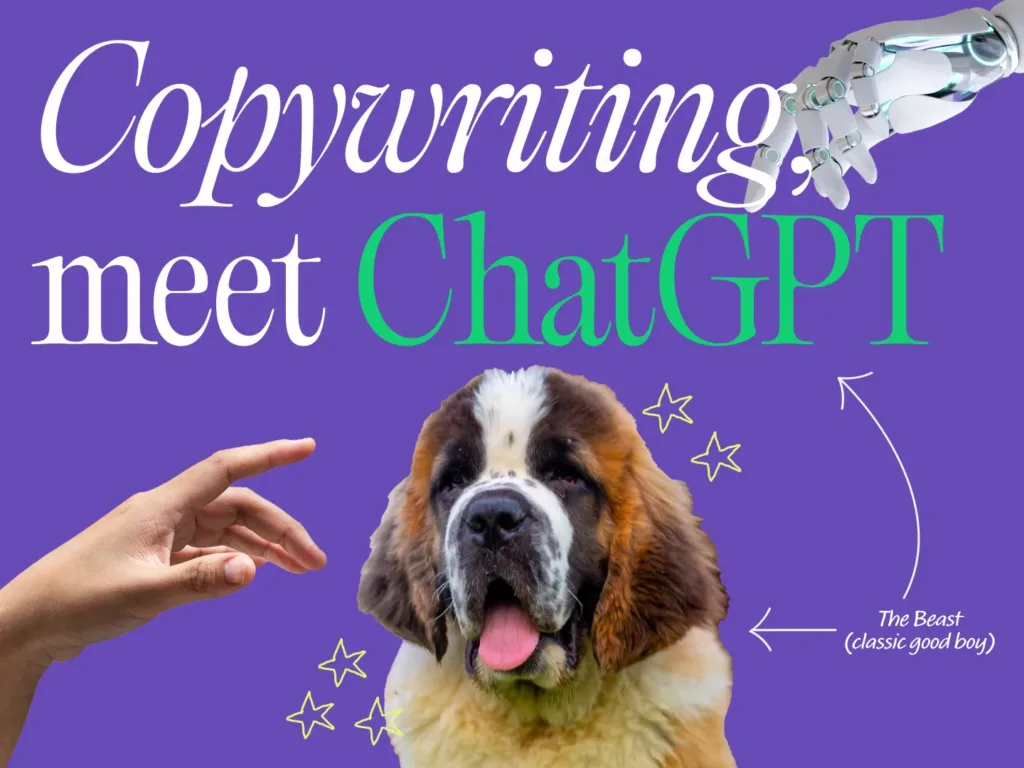
The Art of Copywriting Meets the Science of AI: Humanizing Ads with the Help of ChatGPT

My relationship with AI reminds me of the one between the Sandlot gang and The Beast. You know, the presumably terrifying dog on the other side of the fence that the boys hear horrifying myths about for years?

As it turns out, The Beast was your classic good boy and nothing to fear all along.


In the past, the mere mention of AI in casual conversation has made me uneasy.

But the fence came down, the huge dog ran over, and turns out, it’s all okay.

In fact, I think we’ll be good friends.

Writing is just about my favorite thing in the world and because I love the unique feeling of reading a line and thinking, “Damn, that’s good,” I want to experience it as much as I can in this little life.

So if I am aware there is a technology that triggers that specific dopamine release that comes from sitting back and reading a clever line, all the while helping me become a better, more effective writer, well unleash the beast.

I wanted to show an example of how ChatGPT works as my friend, not my enemy to write solid copy.

We’re starting with a blank billboard mockup for a company that produces really clever copy, Oatly.

I’ve come up with a headline using my standard-issue human brain.

It reads “Everyone’s entitled to their oat opinion.”

My intention for this mockup is to write copy that captures the charming self-awareness that is inherent to the Oatly brand, one that communicates, “We know not everyone likes us and we’re cool with that.”

I jot down the second blub but am stumped as I attempt to come up with another description of the type of person who would be passionate about oat milk. (You either know the type or you are the type. Sorry, I don’t make the rules.)

So, I turn to ChatGPT and ask “What are some other descriptions in the realm of Etsy candle maker, daily vlogger, reiki healer, etc.?

“Handmade soap crafter” appears.

“Bingo! Thanks, homie.”

I list some of the best negative Oatly reviews I can find online.

Now, I am in need of a line to close it out, one that gives off an “It is what it is” attitude.

But, that’s not exactly what I want to say…

So instead of snapping my fingers while looking upward with my eyes closed, I ask ChatGPT for some other ways to say just that.

“No use crying over spilled milk.”

That’s a no-brainer.

…And done!

The end result? A billboard that sounds like a human was behind it because that’s the truth.

I asked ChatGPT to develop copy for the same concept all by its lonesome.

It reads, “Oatly oat milk is not for everyone. We understand that some people still prefer traditional dairy milk, and that’s okay. That’s why we’ve created an oat milk that’s specifically designed for those who want to try something different. Our oat milk is creamy, versatile, and made from 100% natural oats, making it a healthier and more sustainable alternative to dairy. But, we don’t expect everyone to like it. If you’re curious and willing to try, give Oatly oat milk a chance. You might be surprised at how much you enjoy it. And if not, that’s okay too. We just wanted to offer you an alternative that you can feel good about.” 

It’s not terrible, but it’s also not terribly fun.

But even the best of friends get jealous of one another from time to time, so in my efforts to keep building up my confidence via AI affirmations, I ask ChatGPT what human copywriters can do that it cannot.

Sometimes you just need a little ego boost from AI. Now, this is the right place to insert, “It is what it is.”

It answers, “While I can provide information and generate text based on my training data, a human copywriter has the ability to bring a personal touch and human connection to their writing.”

“You always know just what to say,” I reply and wink at my computer.

Whether it’s humor, emotion, authenticity, personality, or storytelling, the rhythm behind good ads is a steady sense of humanness.

Because good brands feel human.

That’s not going to change, but neither is the continuation of AI growth.

If we choose to see it as a friend and not a foe, this can be exciting instead of terrifying.

You know, like a sweet, slobbery Mastiff.

So to my fellow copywriters, brand makers, and story shakers, consider this your personal invitation to transform your potential enemy into your newfound sidekick.

But lastly, as you begin to befriend AI, keep in mind, just like any other friendship, it’s important to understand your counterpart’s limits and strengths.

Because truth be told, your human friends are probably much more fun at parties.

Let’s Talk About Spec, Baby!

Spec work:

two words that strike fear into the hearts of creative agencies everywhere.

Many promising engagements have been sullied by the last line of an RFP with beat-around-the-bush verbiage that goes something like this: “We’d like to see an example of how you envision this campaign coming to life.” Shudder. And things were going so well!

While roundly rejected by AIGA and The American Advertising Federation, spec work requests just refuse to die. And look, I get it, you want to take the car for a spin before you buy it; you want to taste the wine before you commit to the whole bottle; you want to sleep in the house before you move in. (Is that even possible?) But for myriad reasons, soliciting spec work isn’t just disrespectful to your prospective partners—it’s also bad for your business.

So, fasten your seatbelts: we’re grabbing our wooden stake, silver bullet, and holy water, and putting an end to spec work, once and for all. Here are four reasons spec work should return the grave—and stay there.

1. IT DOESN’T FOLLOW OUR PROCESS

Not to be inflexible, but we have a process that governs all of the work we output. We’ve spent ten years carefully creating a method for achieving the best work and results for our clients. Is it flexible? Of course, but that flexibility usually entails MORE information and collaboration, not less. At Tilted Chair, we’re big believers in focusing on the process as a means of achieving results. And building a campaign or design off of a PDF—no on-boarding, no stakeholder workshops, no objective-setting—isn’t focusing on the process.

2. HALF-ASSED ENGAGEMENTS BREED HALF-ASSED WORK

After all, to fully engage with our clients, we need time together. And most spec briefs are standalone documents that can’t possibly replace deep, in-person—or in the case of 2020, virtual—collaboration. Spec briefs don’t allow for any kind of immersion or meaningful collaboration, which means the whole concept is half-assed. And you know what that leads to.

3. IT DOES A DISSERVICE TO OUR PAYING CLIENTS

At the end of the day, the checks keep the doors open. Not promises of checks, or prospective checks, but real, paper checks. (And ACH deposits for all of you angels out there.) There’s only so much time in the days, weeks, and months, and when we take on speculative creative work, we sacrifice time we could be spending on solving the problems of our paying clients. How is that fair?

4. IT SETS A BAD PRECEDENT

If we’re willing to sacrifice paying client work to do your spec work, doesn’t that mean we’ll do the same to you once you become a paying client? Do you really want that?

5. YOU HAVEN’T PAID FOR IT

Plain and simple. We’re in the business of creating commercial culture and art, and you don’t get that until you pay for it. Intellectual property is serious business, and to get the best, you’ve got to be willing to invest in the best.

Now, there are those who might retort, “What about business development? Do you get paid for that?” No, of course not. And that’s okay, because relationship-building is a part of the deal. In fact, it’s pretty much the whole deal. But investing in relationships is different than committing the actual time, resources, and energy it takes to do the work. We’ll build relationships all day long. We’ll even give away free ideas and insights that come up in discovery discussion. But when the dreaming turns to doing, we enter the realm of the inappropriate and ineffectual.

And that’s a place that nobody wins.

Have a project and some budget? Get in touch with us today.

Step 1 of 3

This field is for validation purposes and should be left unchanged.
What’s your name?(Required)

Branding Beyond 2020: The Human Method

In today’s digital age,

consumers can pretty much buy anything, at anytime, from anywhere. So what makes someone choose one brand over another? Furthemore, what keeps them coming back? We believe the answer to these questions lies in the amount of humanity in brands. Let’s take Southwest Airlines (a personal favorite of mine) and the amazing brand they have built over the years.

Everything from the colors they use, to their fun ads showcasing their employees, to their philosophy of not nickel-and-diming passengers has built one of the best examples of a human brand.


WHY ARE HUMAN BRANDS MORE SUCCESSFUL?

The answer seems very simple when you think about it, but human brands (brands built upon a human persona) are able to better connect with people. They take thousands of years of human interaction and distill it down into a relatable and familiar personality that people are able to identify with and build a relationship with. People know what drives the brand, the values of the brand, the goal of the brand, and ultimately how they as consumers should engage with the brand. Human brands make it easy for people to open their hearts—and ultimately, their wallets.

HOW DO YOU CREATE A HUMAN BRAND?

Over the past five years we have branded more companies than we can count. The method we utilize gives birth to very strong brand personalities that can continue to grow as the company and culture evolves. Our method has three steps:

  • Understand your brand personality.
  • Understand the brand personality of your competitors.
  • Build your brand around that personality.

We’ll briefly take you through each of these parts and explain how our team successfully creates some of the best human brands possible.

Understand your brand personality. If we don’t know who we are, how can we expect others to get to know us? We use archetypes to help us understand our brand personality. Archetypes are personas developed in the early 1900s by Carl Jung, a Swiss psychiatrist and psychoanalyst who founded analytical psychology. Archetypes have super cool names like the Hero, the Outlaw, and the Sage. In order to identify our brand personality we first conduct an archetyping workshop with all key stakeholders of an organization. These workshops usually last from two to six hours depending on the number of stakeholders participating. Not only does this give us insight into the values and true mission of our clients, but many times our clients have never gathered in a room together to discuss these topics. So in a way, this workshop acts as a therapy session/team building workshop. At the conclusion of this workshop, we can usually narrow down our client to two or three archetypes.

sun tzu for branding
Understand the brand personality of your competitors. Since we are rarely the only option for our consumers, we also have to look at our competitors. What are their brand personalities? What space are they occupying in our consumers’ minds? Humans like variety. Think about the show “Friends.” Now think about which of the characters you best identify with. Was it Joey? No? Well, that’s the character I identify with so it’s a good thing the writers decided to give them all different personalities. The same theory goes for brands. You and your competitors may offer similar products, but it’s your personality that people will connect with. That’s why we go through a thorough analysis of your top competitors to help identify the archetype they most authentically align with. At this point we can ensure the archetype we assign to a brand both encapsulates the essence of the brand, as well as occupies a unique space not currently occupied by your competitors.


Build your brand around that personality. This is the last step in creating a truly powerful human brand. Once we know our archetype we can begin building an identity that communicates the mission, values, and motivations of that archetype both visually and verbally. The colors, the fonts, the textures, the photography style, and the words we use should all strengthen and convey your brand personality. Both consciously and subconsciously, it should provide our consumers with a clear understanding of who we are as a brand. This is what truly great branding experts are capable of doing. They don’t just create cool logos and identity systems, they build a communication bridge between your brand and your consumers across which human connections can be made.

Using our methodology to branding not only lays the foundation for a strong brand but arms companies with a cohesive identity from which all business decisions and processes can rely upon. A Hero can’t just wear a cape. She has to embody the morals and values of a hero. Putting some thick books on a shelf doesn’t make you a Sage. The Sage must be constantly learning and sharing that knowledge with others. No matter what your business goals might be—retention, market share, or some other objective—make sure your brand is human. Because it’s human brands that will continue to thrive and connect with people in 2020 and beyond.

Need help navigating in the new reality? Hit us up.

Step 1 of 3

This field is for validation purposes and should be left unchanged.
What’s your name?(Required)

Marketing in a Recession

It’s a word that no one wants to say, hear, or think about: recession.

Like wizards gasping at the utterance of the name “Voldemort,” the prospect of a recession is enough to make muggles shudder—and panic. And while the coronavirus was perhaps just the match that lit the fuse, the prospect of at least some kind of long-term global economic impact is looking increasingly probable.

I’m not a doomsday prophet, and the objective of this article isn’t to proselytize hysteria. Quite the contrary. If I’m early in predicting an economic downturn, well, that’s kind of the point. As an agency that was born at the tail end of the last recession, we know a thing or two about prospering during tough times. The most important lesson we learned from the early days of operating a business during a recession pertained to preparation: psychological, strategic, and tactical preparation. If you get ahead of it and develop the right plan now, you very well just might find yourself stealing market share, gaining new fans, and popping discounted champagne while your competitors are panicking.

DON’T PRETEND WE’RE NOT IN A RECESSION

At the core of the human brands we develop is empathy, and not just during a recession. Have empathy for your customers, and exhibit an understanding of their situation. Nothing is more alienating than an out-of-touch brand pushing unrealistic expectations. Brands that identify with their audience and act with a genuine sense of empathy stand a better chance of endearing themselves to their audience—and weathering the storm.

FOCUS ON PRACTICAL VALUE

During leaner times, people have less disposable income. Every dollar needs to go further. Communications intended to stimulate activity toward the middle and bottom of the funnel should emphasize the real, tangible value of engaging with your brand.

EXPLORE “ESCAPE” ADVERTISING

When reality is depressing, people seek outlets that allow them to escape. It’s one of the reasons that movie theaters do so well during a recession. And with technology making escape advertising more viable than ever, there’s no time like a recession to test out this approach. If it fits your brand position, capitalizing on the impulse to escape reality may very well prove a winning formula.

EXPLORE “COMMUNITY” ADVERTISING

On the flip side of escape advertising would be what we might call “community” advertising. Another human response to fear and uncertainty is retreat to familiarity. If it fits your brand, experiment with more comforting and soothing messages—ones that reinforce the idea of home, family, community, and togetherness.

OFFER DISCOUNTS

Nothing screams “empathy” like advertisers putting their money where their mouth is. Literally. Discounting products is a time-tested way of introducing value-seeking customers to a brand. And during a recession, everyone’s looking for a great deal. That’s why discount retailers—among several other types of businesses—perform better than everyone else during a recession. And while discounted products might not fit into every brand’s long-term strategy, during tough times, a discount might just mean the difference between making a sale and missing out.

DON’T CUT YOUR MARKETING BUDGET

The blatant self-serving nature of this last one isn’t lost on me, but seriously, it’s true. Cutting your budget during a recession is the marketing equivalent of panic selling stocks, which as it turns out, is a really bad idea. Why would you cut budget when everything just got cheaper? Media and other marketing-related expenses are literally on sale! It’s precisely during an economic downturn when advertisers have the opportunity to strategically lock-in contracts at bargain-basement rates.

In the end, all of this might be for naught. But in the spirit of hoping for the best and preparing for the worst, start putting a plan together now. In marketing, like in life, “an ounce of prevention is worth a pound of cure,” as the saying goes. The sooner you activate and develop a plan for your business, the easier you can breathe should times get tough, knowing you’ve developed a plan equipped to handle smooth seas—and choppy markets.


Need help formulating a plan? Contact us below.

Step 1 of 3

This field is for validation purposes and should be left unchanged.
What’s your name?(Required)

The Case for Tilted Chair

What exactly is a “human brand?”

Well, let’s start with an example of the opposite.

HubSpot found that B2B sales teams have increased their messaging by 89% since March 2020.

The result?

A massive 29% drop in response rate.

A pandemic and economic recession is not the time to bang down your customer’s doors with your latest offer.

Marketers need a nuanced approach that considers the entire consumer experience.

Rather than “targeting customers,” a human brand seeks to do right by people.

They communicate with their audience the same way you would your friends.

If you’re a brand that’s looking to revamp your positioning, you’re in the right place.

Or maybe you’ve been bootstrapping it until now and you’ve never had a professional agency help you organize the way you think and talk about your business.

Feeling growth bottlenecks? A fresh set of experienced eyes is exactly the solution you need to scale beyond your current limits.

So, let’s dive into exactly why Tilted Chair is the best marketing agency in Austin for creating human brands.

Let’s Talk Pricing…

Cutting right to the chase.

I know budget is a top concern for any business, even in the best of times. That’s why we’re gonna talk about it first instead of trying to lure you into a sales call just to find out if you can afford us.

We’ve made a name for ourselves by focusing on creating as much value for our clients as possible—and not by focusing on lining our pockets with profit.

Neither the cheapest nor most expensive option on the market, we operate in the sweet spot that provides entry points to businesses of all sizes.

From local restaurants to Fortune 500 heavyweights, all businesses should operate with a people-first philosophy. We’ve helped them fearlessly and relentlessly injects humanity into their advertising.

No matter your stage of growth, you’ll get a custom solution designed around your goals and budget.

Where The Magic Happens

Now we’re getting to the fun part.

We walk the talk when it comes to creating a client-centric marketing strategy.

First, we start with a stakeholder workshop to make sure all stakeholders are heard, and ultimately, aligned. Then, we dive into giving your human brand a heart and soul.

We call this process “Archetyping.”

These Archetypes are taken from Carl Jung’s framework of 12 fundamental human archetypes. These personalities tie into psychology that has connected with audiences since the dawn of language. The software operating the recognition of these fundamental human motifs has been running for 300,000 years, and is already built into the system, which is why this approach is so powerful.

Once we have your Archetype, next is we conduct research into your competitors and audience. This allows us to listen to what people are saying about your brand, product, competitors, and industry.

It’s a headache keeping up with the latest trends while balancing so many other aspects of your business.

But, our team of musicians, artists, writers, and nerds love pouring over the latest SEO updates from Google and technologies driving results.

In other words, we’re an agile team of creatives with our heads to the ground. We’re always ready to deliver you the latest innovations in the space.

Here’s What We Can Do For You

A marker of any experienced agency is having a breadth of services to meet your marketing needs.

From web development to video production, Tilted Chair has you covered. We’re a full-service agency in a boutique size.

Because every organization brings unique challenges and measurements of success, we don’t offer cookie-cutter solutions.

We’ve found that our Archetyping frameworks lead to engaged audiences. When people engage with brands, they’re 50% more likely to click on an ad or find out more about company promotions or events.

That means more smiles all around at your stakeholder meetings.

Our services break down into 5 major categories:

  1. Strategy: messaging and brand positioning built on Archetypes and industry research.
  2. Creative: campaign and design development topped off with conversion copywriting.
  3. Interactive: beautiful, useable web solutions that are, responsive, and on-brand.
  4. Production: Tilted Films covers all your animation, video, and photography needs—in-house.
  5. Media Management: campaign and analytics setup and monitoring for long-term optimization.

Our services all tie into one mission: to engage real human beings with great brands through authentic and resonant storytelling.

Each category layers on top of the next to help you reach the right people, in the right place, at the right time. In other words, maximum efficiency with your marketing dollars.

Portfolio

We’ve been perfecting our process for the past ten years and have the results to prove it.

Our list of satisfied clients includes local favorites like Austin Java and NadaMoo! to billion-dollar international businesses like Amazon and RedBull.

If you look at the dozens of case studies in our portfolio, you’ll see that we’ve just about done it all.

We’ve helped launch a presidential campaign and lead that candidate to the front of the fundraising pack with a razor-sharp digital campaign.

When Torchy’s Taco’s handed us their August “Some Like It Hot” campaign, we delivered a 26% bump in social engagement which led to 60k taco sales in 30 days.

When Ottobock wanted to expand its reach to provide prosthetic limbs, we rose to the challenge with a 526% increase in leads while decreasing spend by 819%.

The results speak for themselves.

No matter your size or industry, we have the experience and capability to get the job done.

A Little About Working With Us

As much as we use terms like “businesses” and “brands,” ultimately these are groups of people with a common goal.

Relationships are what tie us all together so we want to make sure that we’re a good fit—culturally and philosophically—for any company we work with.

As your marketing team, we’ll be working side-by-side (in spirit given COVID-19) to make sure your project is a booming success.

At Tilted Chair, we like to have fun!

We don’t take ourselves too seriously but we do give 100% on our client deliverables.

Our culture is built on three pillars:

  1. Be Fearless: our expertise allows us to seek creative solutions new challenges
  2. Be Relentless: we prepare, sharpen, and educate ourselves to do spectacular work
  3. Be Human: team players that put empathy into every part of our process

So, if that sounds like the kind of people you’d grab a coffee—or beer—with, we’d love to hear about your next big idea.

Bringing It All Together

When all is said and done, your success is our success.

We get excited when you win and frustrated when results don’t meet expectations. But don’t worry, that’s when we get right back in the shop to keep testing until we nail it.

We apply our human brand philosophy daily internally and with our clients.

Each and every member of our team is committed to your success. So, if you’re in the market for a new marketing agency to handle your next website, SEO, campaign, brand overhaul, or just updating some old content, Titled Chair can help.

Drop us a message with what you have in mind. From me and the entire team, we can’t wait to hear from you.

Step 1 of 3

This field is for validation purposes and should be left unchanged.
What’s your name?(Required)

Do I even need an agency?

Do I need an agency?

It’s not a question we get a lot, at least not in those terms. But the issue of value is something that—at least passively—underscores all client-agency relationships. Like a latent computer program, it hums along in the background, quietly sowing dissonance in the mind of the creative service buyer. What’s all this for? Is there a better way to do this? Do I even need an advertising, branding, or marketing agency?

This query might strike fear into the hearts of other advertising agents, but not here at Tilted Chair. No, after nearly nine years of partnering up with some exciting, intrepid—and yes, human—brands, we’ve nailed the formula for answering it. As it turns out, there are several different reasons to incorporate a branding, advertising, or marketing partner into your business plans. And while they range from practical to philosophical, they all lead to one undeniable conclusion: you need an agency.

Specialization

As Verne Harnish once said, great businesses are built around “the right people doing the right things right.” It’s a catchy excerpt that happens to be completely true. Depending on your role in the business, there’s a good chance that many of the skills required to build, launch, or market a great brand fall outside the scope of your job description. For many of these functions, it’s not that you can’t perform them—it’s that you shouldn’t. That’s where an agency comes in. Need a strategic communications framework? (Hint: you do.) We’ve got the expert for that. Need to develop a visual communications system? Been there, done that. Need a go-to-market paid media plan? Are you an expert at any of these things?! Because we are! We call it specialization, and it’s what we do. Every. Single. Day.

Efficiency (as measured in time, money, and energy)

To those who are familiar with agency fees, this one might sound crazy, but stick with me: hiring an agency saves money in the long run. Don’t believe me? Try building out a full-service marketing department that can tick all of the above boxes while spending less time, energy, and money than you would by simply hiring a great full-service agency. That’s the beauty of the agency model: we hire the talent and lend it to you. No recruiting, no onboarding, no benefits, no egos. An agency like Tilted Chair is a turnkey marketing solution that offers fractional expertise, meaning you only pay for as much of it as you need, and only when you need it. It doesn’t get more efficient than that.

Scale—up or down

The marketing landscape changes quickly, and that means you need to be responsive. Your needs tomorrow very likely won’t match your needs today, and partnering with an agency allows for great resource flexibility. We can scale up—and, heaven forbid, down—with the needs of the client. Notch one in the agency column for scalability.

Perspective

This is a more abstract one, so you’ll have to bear with me. But those who have been very close to a marketing problem for a long time will understand: you need an outside perspective. Getting bogged down with the day-to-day duties and demands of an in-house branding or marketing position often leaves little time—or bandwidth—for a more holistic view of the situation. Partnering up with a branding, advertising, or marketing agency can provide just that perspective. We haven’t been living with your situation for very long, and this frees us up to propose new, innovative, energetic, and optimistic solutions to your communications problems.

Cohesiveness / Coordination / Collaboration

Anyone who’s been around long enough knows that a great brand is built upon a strategic and cohesive vision, and then tactically executed in a symphony of coordination and collaboration. Okay, it might not be so poetic in practice, but the sentiment remains. Our strategists work with our creatives, who work with our media and production people, who work with account executives, all collaborating across traditionally isolated lines to achieve a beautiful brand harmony. It’s seriously a marvel to behold.

So there you have it, five great reasons to save yourself the time, money, and hassle of building out your own internal marketing department and hire a full-service creative agency like Tilted Chair. If we’ve successfully answered the question of “Do I need an agency?” you may be left with another: “What am I waiting for?” To which we’d respond, our contact page is right here.

A Hero’s Midlife Crisis

It’s easy to forget about yourself.

If you’re a parent, you’re probably well-acquainted with that reality. In the service of so many others, self-care is something that’s regularly forgotten. Sleep, exercise, and even hygiene often fall by the wayside as you spend your time ensuring your dependents are fed, clothed, and prepared for the outside world. The effect of this negligence builds up, of course, and eventually pops, sometimes in the form of a girls’ weekend in Ft. Lauderdale, or an impulse purchase that gets parked in the good spot in the garage. The classic midlife crisis.

It’s a peculiar moment in a person’s life, but it’s not unique only to individuals. Companies suffer existential anxiety attacks as well—especially professional service companies, and especially especially branding and advertising agencies. The client comes first, which means you come last.

That is, until you make yourself the client, which is exactly what Tilted Chair just did. For the first time in our 8 year history, we made ourselves a priority, and took a long, hard look in the mirror. Who are we? Why are we here? What’s special about us? Where are we going?

Over the last four months, we answered these questions and more. Perhaps most importantly, we applied our unique archetyping process to our own brand, and identified ourselves as a Hero agency—in stark contrast to most creative agencies who fancy themselves the Creative or the Magician. Our history, culture, and approach are different than most agencies, so why shouldn’t our brand also be different?

To say we learned a lot through the exercise of re-branding is a woeful understatement. We gathered insights, defined processes, and sharpened our focus. The new Tilted Chair is bold, sporting superhero colors and a resolute new messaging architecture. We’ve assumed our place in the battle of the brands: we are the makers of human brands. Our allies? Client partners who understand the value of being authentically human. Our enemy? Bad advertising. Our aim? To fearlessly and relentlessly inject humanity into advertising. That’s right YouTube “skip ad” button: we’re coming for you.

Tilted Chair’s first 8 years were awash with challenges, achievements, and milestones, and we’ve chronicled that origin story proudly. But just like Batman after Tim Burton got done with it, it was time for a reboot. So welcome to the next chapter of the Tilted Chair saga. We’re a lean, mean, ad-kicking machine, better positioned than ever to help our client partners achieve branding humanity. If you liked the first version of Tilted Chair, buckle up. The sequel is going to be epic.

Be unmistakable.