How Much Does a Rebrand Cost?
The short answer
A serious company rebrand can cost anywhere from roughly $15,000 to well over $100,000.
That range is annoyingly broad because “rebranding” can mean wildly different things.
Refreshing an existing identity for a company with a clear strategy is one project. Repositioning a multi-product technology company, interviewing customers, rebuilding its messaging architecture, creating a new visual identity, renaming products, redesigning its website, and rolling the brand out across five countries is another.
They probably shouldn’t cost the same.
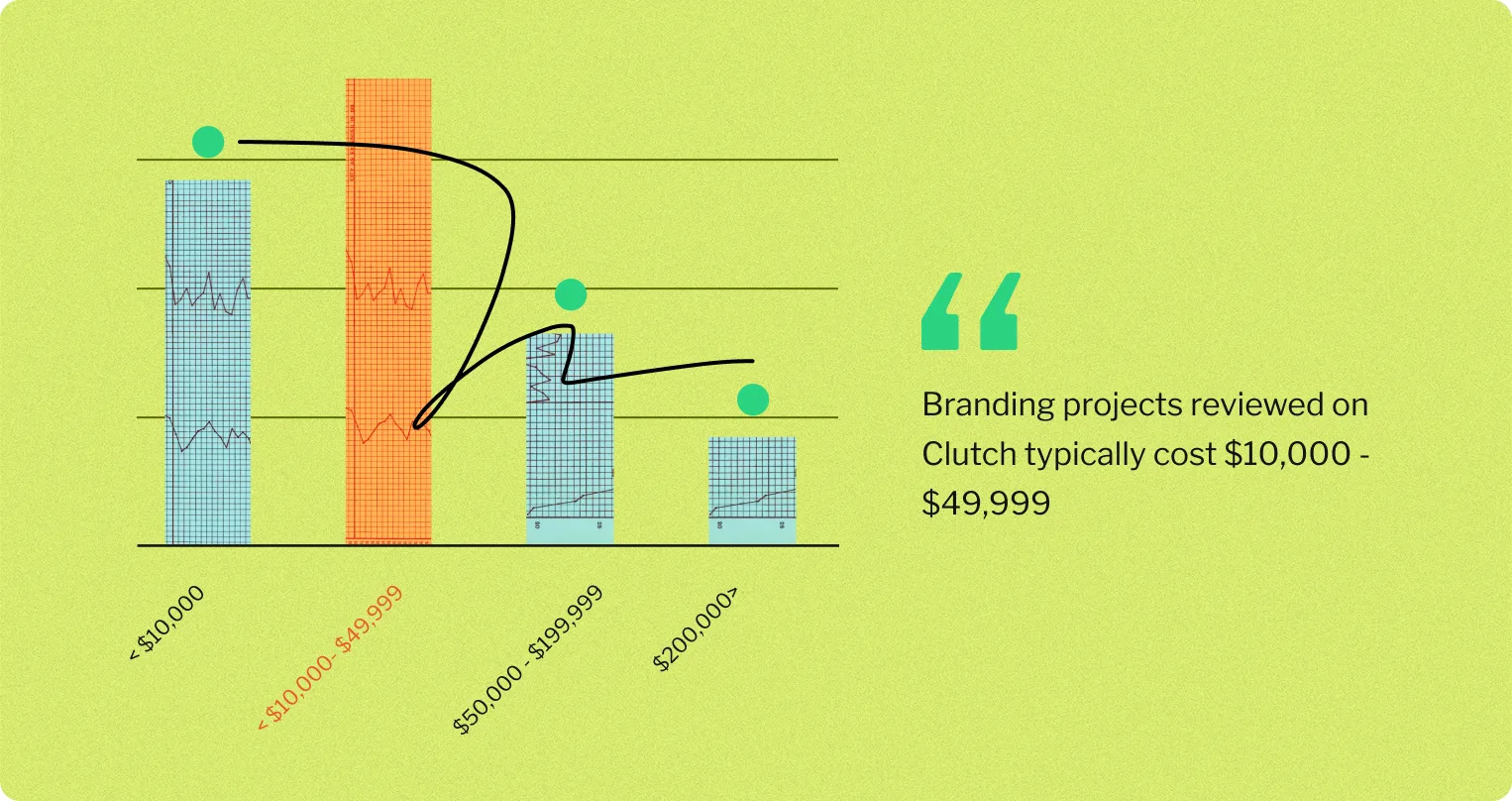
Current market data reflects that variation. Clutch reports that most branding projects reviewed on its platform fall between $10,000 and $49,999, while the average project cost in its verified review data is roughly $71,652. Its U.S. data puts full brand identity systems around $25,000–$150,000, with enterprise rebrands potentially reaching $250,000 or more. (clutch.co)
That doesn’t mean you need to spend $150,000 to get a great brand.
It means you need to understand what you’re actually paying for.
A more useful way to think about rebrand pricing
At Tilted Chair, we tend to think about branding engagements in three broad levels.

Focused Brand Refresh: roughly 15K–25K
This is appropriate when the business strategy is largely sound but the brand expression hasn’t kept up.
Maybe your visual identity feels dated. Your messaging has drifted. Different teams are telling slightly different versions of the story. Or the company has simply become more sophisticated than the brand representing it.
Research at this level may include leadership workshops, a competitive review, existing customer insights, and an audit of the current brand.
The goal isn’t to rethink the company from scratch. It’s to sharpen what’s already there.
A project might include positioning refinement, messaging, visual identity evolution, and updated brand guidelines.

Strategic Rebrand: roughly 25K–40K
This is where many substantial mid-market branding engagements live.
Here, the problem is deeper than aesthetics.
Maybe you’ve entered a new market. Your audience has changed. You’re moving upmarket. Your product portfolio has expanded. Competitors have caught up. Or your sales team is spending far too much time explaining what makes you different.
This is where you’re not just changing how the company looks.
You’re clarifying what the company means.

Comprehensive Rebrand: roughly 40K–60K+ @ TC
More complex organizations create more complex branding problems.
This level might involve extensive stakeholder interviews, customer research, multiple audiences, multiple products, naming, brand architecture, a more expansive identity system, templates, launch planning, or significant organizational alignment.
At Tilted Chair, our larger branding engagements generally live around this range before major website development, paid media, video production, or broader rollout costs are added.
Other agencies may charge significantly more for comparable engagements.
That’s not automatically a red flag.
Large national and global branding firms often support much larger research programs, global stakeholder groups, organizational change management, multilingual rollouts, extensive brand architecture, and larger project teams. DesignRush currently places full-service branding engagements around $11,000–$70,000+, with enterprise engagements commonly extending beyond $100,000. (designrush.com)


Large national and global branding firms often support much larger research programs, global stakeholder groups, organizational change management…
What actually drives the price?
The number of logo concepts isn’t usually what makes a rebrand expensive.
Uncertainty does.
The more questions that need to be answered before good creative decisions can be made, the more work the project requires.
Research depth is one of the biggest variables.
A fairly straightforward engagement might involve leadership workshops, competitive research, and analysis of existing customer information.
A more involved one might include interviews with customers, prospects, employees, executives, salespeople, and partners.
A major enterprise engagement might include quantitative market research, segmentation, multi-market research, brand tracking, or dozens of stakeholder interviews.
The right question is:
How much uncertainty do we need to remove before we’re confident making a strategic decision?
Other major cost drivers include naming, product architecture, the number of audiences, stakeholder complexity, the amount of messaging required, the sophistication of the visual system, and how many launch assets the agency is expected to produce.
What about the website?
Be careful when comparing branding proposals that include websites with proposals that don’t.
A $40,000 branding engagement and a $100,000 brand-plus-website engagement may actually contain very similar branding scopes.
Website strategy, UX, copywriting, design, development, integrations, accessibility, SEO, content migration, testing, and launch can easily become a substantial project of their own.
Compare apples to apples.
Or at least apples to something vaguely apple-shaped.
Does paying more guarantee a better brand?
No.
But neither does paying less.
What you’re really buying is a combination of strategic thinking, creative talent, experience, research, process, senior involvement, and the agency’s ability to get your organization to make good decisions.
A $150,000 engagement can be a bargain if it solves a $10 million business problem.
A $15,000 engagement can be expensive if you have to redo it twelve months later.
The better question isn’t:
“How cheaply can we get a rebrand?”
It’s
What level of investment makes sense for the problem we’re trying to solve?
The bottom line
There’s no magic number for a rebrand. A $20,000 refresh can be exactly right for one company, while another may genuinely need a six-figure engagement.
Start by defining what has actually stopped working, how much uncertainty needs to be resolved, and what the new brand needs to accomplish. Then compare agencies based on how convincingly their scope solves that problem, not just whose proposal has the lowest number at the bottom.
The right budget is the one that gives you enough strategy, research, and creative firepower to solve the actual business problem without paying for complexity you don’t need.