Small Branding Agency vs. Large Agency: Which Is Right for You?

The short answer
Neither is inherently better.
They are built for different problems.
A smaller senior-led agency can offer direct access, speed, continuity, and less bureaucracy.
A large agency can bring enormous research capabilities, global resources, specialized teams, and the ability to coordinate sprawling multinational rollouts.
The mistake is paying for one when you actually need the other.

When a smaller agency makes sense
A smaller agency is usually the right call when senior access matters.
The people in the pitch room are actually the ones building your brand, leaving far fewer layers between your business problem and the team solving it. That keeps communication faster and the output much more responsive.
Smaller agencies can also be especially effective for organizations where the branding problem is significant, but the operational complexity isn’t enormous.
You don’t necessarily need 40 people to reposition a 150-person SaaS company.
In fact, 40 people might make it harder.

When a larger agency makes sense
Scale becomes valuable when the complexity is real.
If you’re rebranding a multinational with twelve divisions, thousands of employees, research across seven countries, dozens of stakeholder groups, and hundreds of rollout touchpoints, a large agency can provide resources that a fifteen-person studio simply doesn’t have.
Large agencies may offer dedicated research departments, change-management teams, specialized brand architecture expertise, international offices, production teams, and significant implementation capacity.
You pay for that infrastructure.
Sometimes you absolutely should.
What about quality?
Agency size doesn’t determine creative quality.
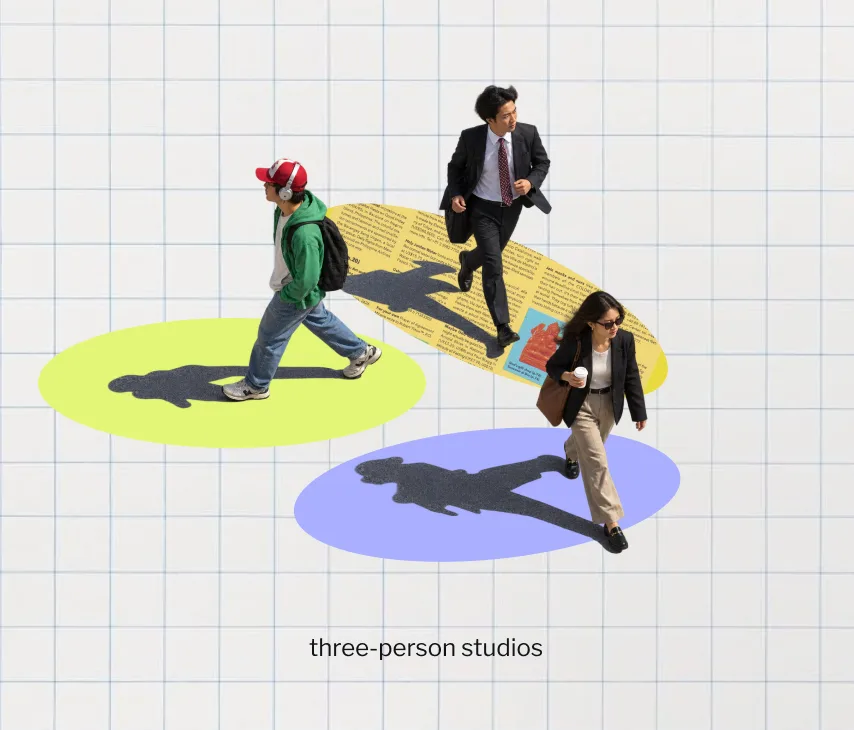
There are brilliant three-person studios.
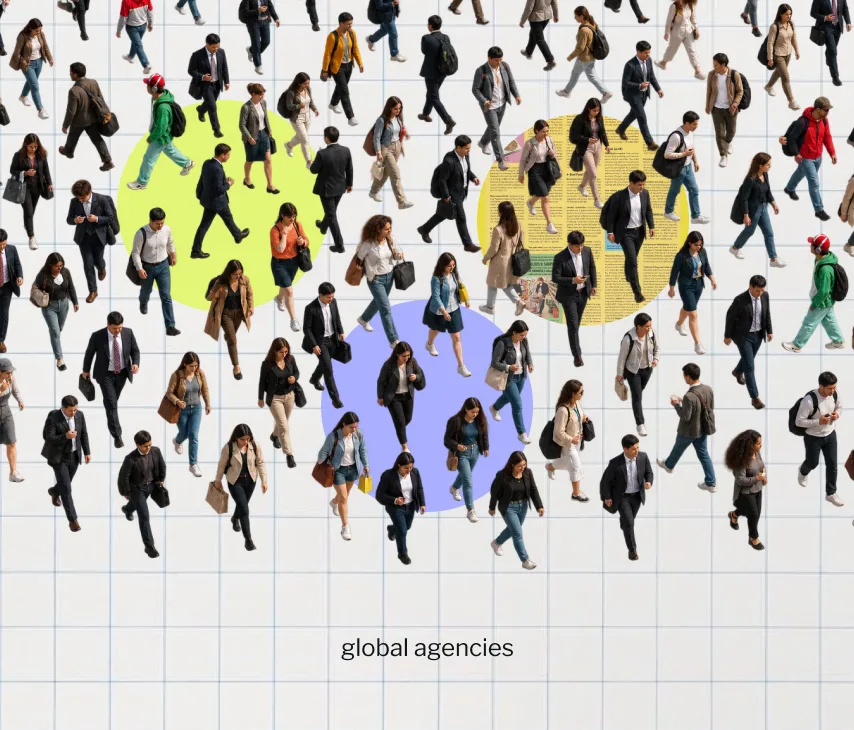
There are brilliant global agencies.
There are mediocre versions of both.
A better question is whether the people assigned to your project have the experience, talent, and authority required to pull it off. This is especially important if you’re considering a larger branding agency (say, over 50 employees), because the work they show you might be from their A-team designers, while the team actually assigned to you is their B-team.
What about cost?
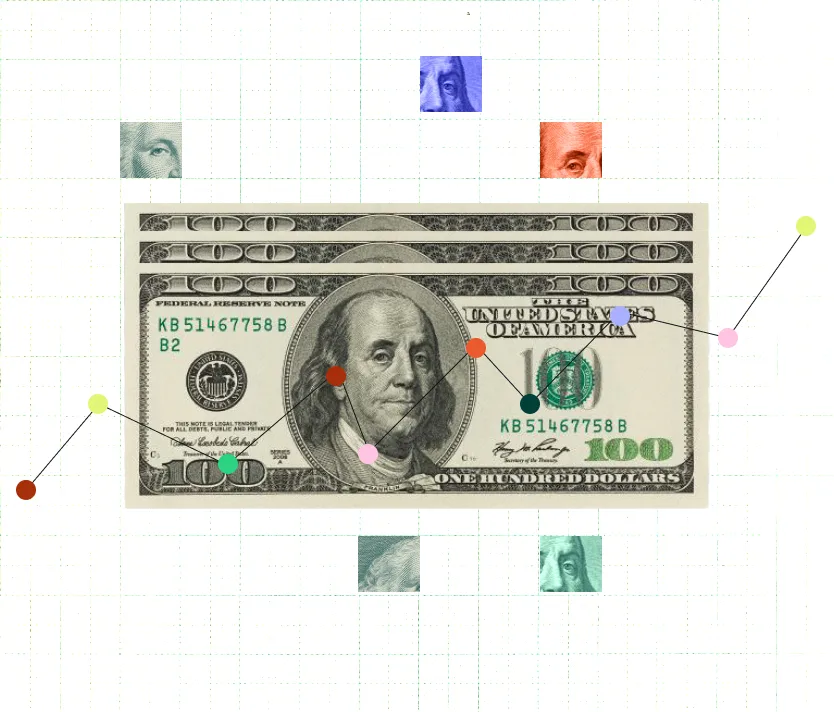
According to Clutch, U.S. agency branding rates run $100 to $300 per hour, and enterprise engagements regularly reach well into six figures. (clutch.co)
But cost alone shouldn’t decide it.

The smallest agency isn’t automatically the best value.
The biggest agency isn’t automatically the safest choice.
Look at what you’re actually buying.
Tilted Chair’s bias
We’re obviously not neutral here.
Tilted Chair is a small senior-led agency.
We think there’s a sweet spot where clients get the strategic thinking and creative quality they expect from a much larger agency, without paying for ten layers of account management between them and the people actually making the work.
But there are projects we wouldn’t be right for.
If you’re a global enterprise preparing a simultaneous rebrand across 45 countries with a 200-person internal implementation team, you may genuinely benefit from a global network.
We’d rather tell you that than pretend our twenty-person team secretly contains an office in Singapore.
The best agency isn’t the biggest or smallest. It’s the one appropriately sized for your problem.
The bottom line
Don’t buy more agency than you need, and don’t buy less agency than your problem requires.
If your biggest need is senior thinking, speed, direct collaboration, and a team that stays close to the work, a smaller agency may be the better fit.
If your challenge is coordinating research and rollout across thousands of people, dozens of markets, and a sprawling organization, scale becomes a genuine advantage.
Pick the operating model that matches the complexity of your problem.