How Long Does a Rebrand Take?
The short answer
A focused brand refresh may take 6–8 weeks.
A strategic rebrand may take roughly 8–12 weeks.
A more complex rebrand can easily take 12–16 weeks or longer.
Large enterprise programs can stretch across six months or more.
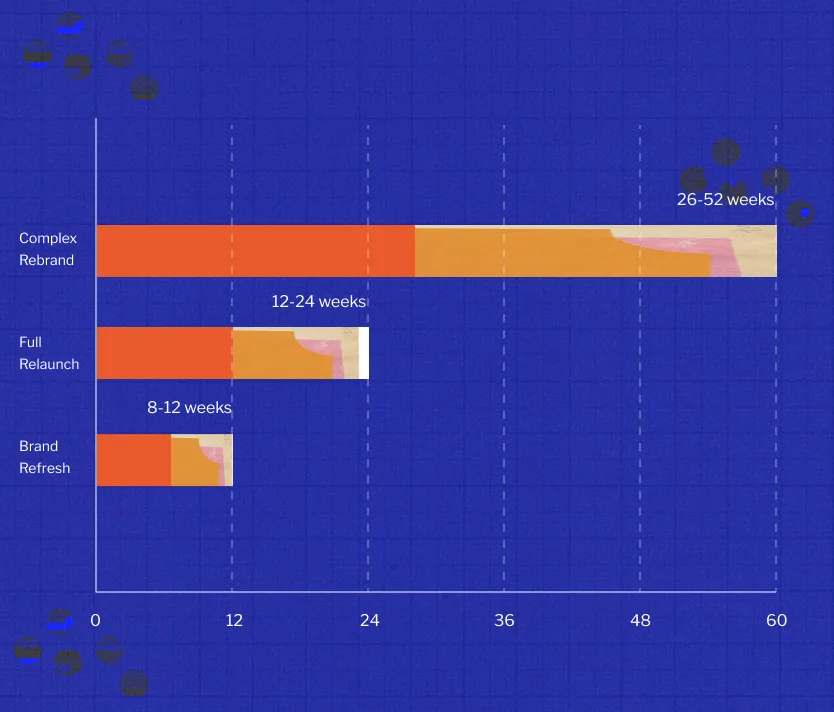

Industry benchmarks are similarly broad. DesignRush currently estimates roughly 8–12 weeks for a quick brand refresh, 12–24 weeks for a full brand relaunch, and 6–12 months for complex enterprise rebrands.
The question here isn’t simply how fast the agency can design.
It’s how fast everyone involved can get to the right answers.
What happens during those weeks?
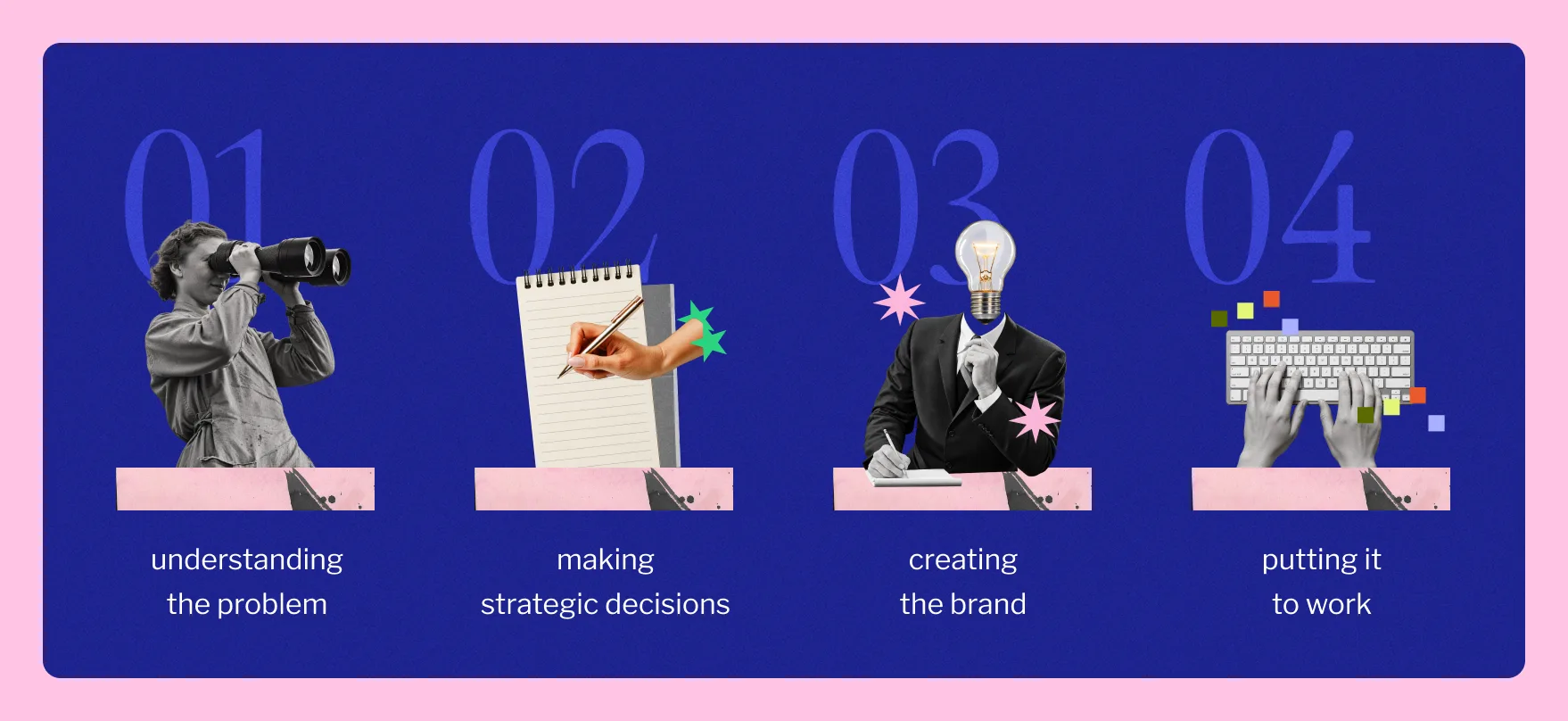
A healthy branding process usually has four major movements.
First comes discovery.
The agency needs to understand the business, customers, competitors, category, challenges, goals, and current perception.
Then comes strategy.
This is where the team makes decisions on positioning, differentiation, audiences, brand idea, personality, architecture, and messaging.

Then comes creative development.
This can include naming, verbal identity, visual identity, typography, color, imagery, graphic systems, and other expressions of the strategy.
Finally, it’s time to systemize and launch.
The brand gets documented and applied to the things people will actually see and use.
The exact names vary by agency.
The important thing is that there is a logical progression from:
Why do some rebrands take forever?
Typically not because somebody spent six months choosing blue.
The biggest timeline killer is decision-making

If every presentation requires input from fifteen people, followed by private conversations, followed by a steering committee, followed by another presentation, your timeline is going to need a few edits too.
Other common delays include slow access to customers, unclear executive alignment, naming and trademark searches, unexpected changes in business strategy, legal review, and stakeholders entering the process halfway through (more than a few times we have had a new CMO or Marketing Director join the organization 25% into the rebrand, and we have had to start the process over again. Hey, it happens.)
One of the best things you can do before hiring an agency is decide:
Who gets input? And who gets the final say?
Keep in mind, those questions are not asking the same thing, and if your branding agency doesn’t ask you those questions in your introductory call, that’s probably a red flag.
Can we rebrand faster?
Usually.
But speed creates trade-offs.
If you need a six-week process instead of a twelve-week process, you might reduce research, consolidate stakeholder interviews, run workshops more intensively, shorten feedback windows, or reduce the number of creative rounds.
Sometimes that’s perfectly reasonable.
Sometimes that’s totally reckless.
If your company has 75 employees and a relatively straightforward business model, you may not need six months of research.
If you’re repositioning a global technology company with eight business units and thousands of employees, trying to “sprint” through strategy in two weeks is probably false efficiency.
Our preference is to make the process as lean as the problem allows, not as long as the agency’s process diagram looks impressive.
How much time will our team need to commit?
More than zero.
Less than doing the rebrand yourself.
A good agency should take the operational burden off your team, but the best branding work still requires access to the people who understand the business. That matters most early in the discovery phase, when knowledge transfer is critical.
So expect concentrated participation during discovery and major strategic decision points.
The worst setup is usually one where the agency disappears for six weeks and comes back with The Answer. If a branding agency you’re considering ever has a 4–6 week gap where they “work” I suggest you run for the hills.
Branding works better as a collaboration. Not design-by-committee. Collaboration. There is a difference.
The bottom line
For most companies, the fastest rebrand isn’t necessarily the best one. But the longest process isn’t automatically the smartest one either.
The right timeline gives the team enough room to understand the problem, make the important decisions, explore creative directions, and put the system into practice without creating months of unnecessary ceremony.
If speed matters, say so at the beginning. A good agency should be able to explain what can be compressed, what can overlap, and which shortcuts would actually put the outcome at risk.